E-Archive and e-invoicing are two important concepts that digitalize business invoicing. Although they share similarities, there are significant differences. Understanding them helps businesses choose the right invoicing method.
What is E-Invoice?
E-invoiceis a type of invoice created, sent and stored entirely electronically. It is used when both the buyer and seller are registered e-invoice users. E-invoices are created according to Revenue Administration (GİB) standards and must use the UBL-TR format.
What Is E-Archive?
E-Archive is a system used to electronically issue and store invoices addressed to individuals or organizations not registered for e-invoicing. E-archive invoices are subject to less stringent rules than e-invoices and can be created in different formats.
Key Differences Between E-Invoice and E-Archive
E-invoicing and E-Archive are electronic invoicing systems, but there are important differences between them. These can be summarized as follows:
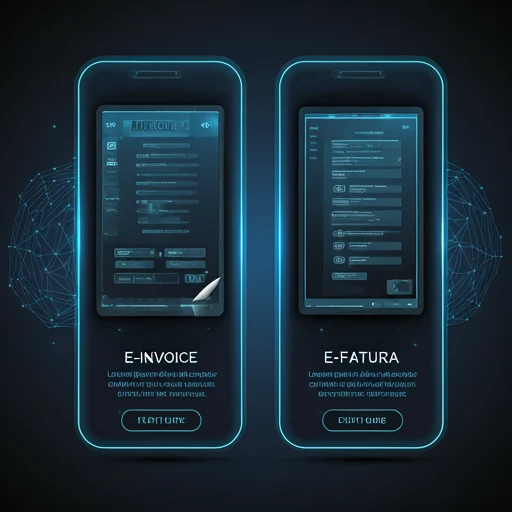
- Registration Requirements: Both the buyer and seller must be registered e-invoice users to use e-invoicing. With E-Archive, the recipient does not have to be registered. This means e-invoicing is mainly used for business-to-business (B2B) transactions, whereas E-Archive is suitable for invoicing both businesses and individual customers (B2C).
- Format: E-invoices must use the UBL-TR format specified by the Revenue Administration (GİB). E-Archive has no such requirement and can use different formats. E-invoicing therefore has a more standardized structure.
- Delivery: E-invoices are transmitted directly to the recipient through GİB. E-archive invoices are generally sent through an e-invoicing provider. This gives e-invoicing a more direct flow under GİB supervision.
- Paper Copies: E-invoices cannot be printed as paper invoices, emphasizing the fully electronic nature of the process. E-archive invoices can be printed. This is particularly useful when invoicing individual customers or recipients who are not part of an electronic invoicing system.
- Timestamps and Financial Seals: Both systems require timestamps and financial seals. These are crucial to the legal validity and security of invoices. The timestamp precisely identifies when an invoice was issued, while the financial seal verifies its integrity and origin.
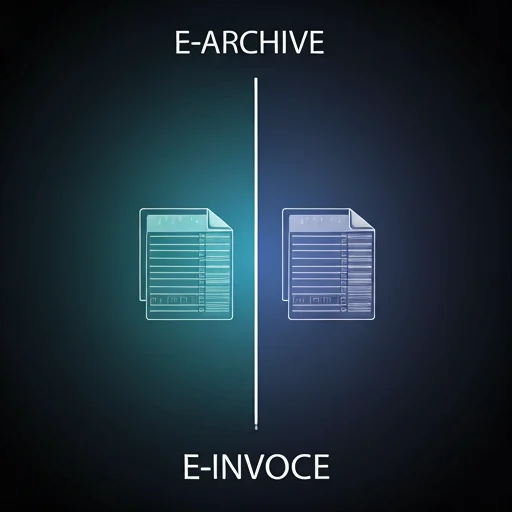
e-invoicing is a standardized system supervised by GİB, used mainly for transactions between registered business users. E-Archive has a broader scope, supports invoicing both businesses and individual customers, and allows paper copies. Both systems ensure legal validity and security through timestamps and financial seals.
Which Type of Invoice Should Be Used in Each Situation?
- E-Invoice: Use e-invoicing when both the buyer and seller are registered e-invoice users.
- E-Archive: Use E-Archive when the recipient is not registered for e-invoicing or e-invoicing is not preferred.
E-invoicing and E-Archive are two important tools for digitalizing business invoicing. E-invoicing follows stricter rules and is generally used between businesses. E-Archive is more flexible and is used to invoice individuals or organizations not registered for e-invoicing. When choosing an invoice type, businesses should consider the recipient's registration status and select the system that best suits their processes.
Evren Bilgisayar systems: E-invoicing is a standardized system supervised by GİB, used mainly for transactions between registered business users. E-Archive has a broader scope, supports invoicing both businesses and individual customers, and allows paper copies.