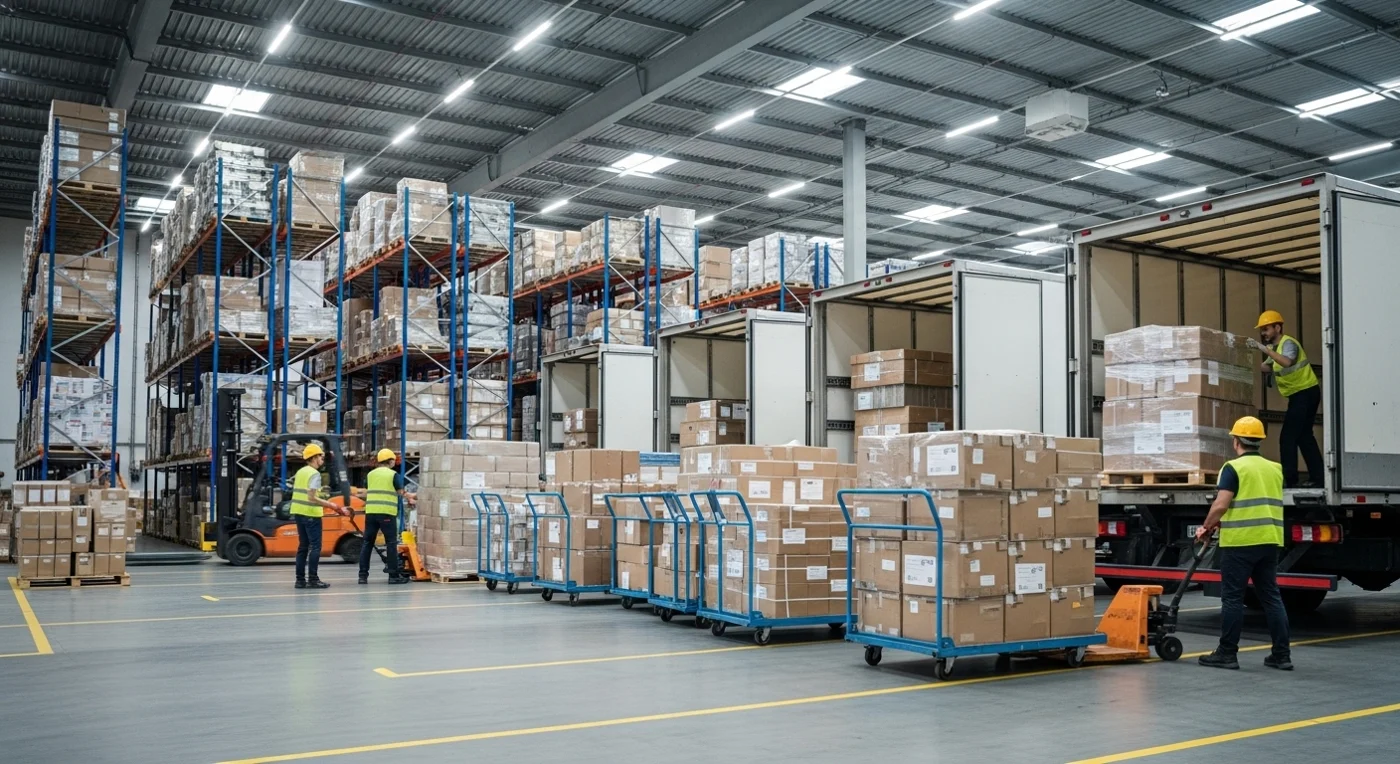
How Should the Delivery Time Window Be Planned?
Delivery time window is the determination of the time within which an order will be delivered to the customer. The aim here is not just to complete the delivery within the day. The main goal is to provide the customer with a realistic time range and ensure that this range is met by the operation. This planning model is of great importance, especially in companies that engage in urban distribution, e-commerce, retail shipment and multi-stop delivery. Because when the correct balance is not established between the customer's expected time and the actual conditions in the field, delivery is delayed, vehicle schedule is disrupted and satisfaction decreases.
This issue is often seen as just route planning. However, the time window is as much about warehouse preparation, vehicle exit pattern, driver capacity, address accuracy and pickup habits as it is about the route. A delivery time that looks good on paper may become invalid due to on-site traffic, building access, security check or customer-related delays. Therefore, successful planning should be done with real operational data, not theoretical calculations.
A correctly established structure creates trust on the customer side and reduces the pressure on the field team. The customer knows when to expect delivery, the team clearly sees which order needs to be completed in which time period, and the operations center manages the day in a more controlled manner. This visibility becomes stronger, especially in companies working with logistics programs. A timetable can be established more accurately when order density, delivery areas, vehicle capacity and past delivery times are evaluated together.
The delivery time window is not just a promise to the customer. It is also the operational commitment that the warehouse, planning and field teams carry together. So proper planning means creating a truly workable time window, not just giving a tight window of time to look quick. A well-established balanced plan produces value rather than ambitious promises that do not reach the customer.

The Place of the Delivery Time Window in the Planning Process
Delivery time window is one of the most important decision areas of the planning process. Because which order will go out first, which vehicle will be directed to which region, and how the workload will be distributed during the day are shaped according to this structure. Planning without determining the time period often consists of simply dividing the order list by vehicle. However, the real need is to re-establish the flow that will complete the delivery within the promised time.
This structure becomes more critical, especially in companies that make multi-stop distribution. If a vehicle visits many addresses during the day, each delivery may have different expectations. Some customers want delivery in the morning, some are available in the afternoon, and some corporate points accept delivery at certain hours. Therefore, planning should be based not only on geographical proximity but also on time commitment. Otherwise, even if orders in the same region appear close to each other, one may delay the other.
This planning logic also directly affects warehouse preparation. Orders that need to be delivered early in the morning must be prepared in the warehouse beforehand. The vehicle loading order should also be established accordingly. When the first deliverable remains at the bottom, the time window begins to break down in the field. Therefore, there is a direct link between delivery time and warehouse exit order.
Another important point is to establish capacity balance. Loading too many deliveries in the same part of the day puts pressure on the vehicle and driver. On the other hand, realistically distributing orders to different time periods ensures a more stable operation of the operation. Healthy planning is not just about sorting the deliveries, but also about distributing the load of the day evenly.
Operational Elements Determining the Delivery Time Window
The first factor that determines this structure is regional conditions. While deliveries are completed quickly in some regions within the same city, serious delays may occur in other regions due to parking problems, security checks, building structure or traffic. Therefore, just because two addresses are close to each other does not always mean that they will be delivered in a similar time. While planning, the actual behavior of the region on the field must be taken into account.
The second element is customer type and delivery habit. Residential delivery and workplace delivery are not planned in the same way. Some customers can be reached at any time during the day, while others can only receive delivery at certain intervals. Admission hours may be limited for corporate purchases. Therefore, planning should be shaped not only by the customer's address but also by his delivery behavior.
Vehicle capacity and the number of daily stops are also decisive. If a vehicle is loaded with too many deliveries, what seems logical on paper may not be delivered in the field. Small delays at each stop quickly increase the total time. Therefore, when determining the time window, not only the first delivery but also the entire load of the route should be evaluated together.
Warehouse check-out time also has a big impact. If the order is not prepared correctly, the document check is prolonged, or the vehicle is not loaded on time, the given time window will be broken before the field even starts. Therefore, scheduling is not just about time on the road. All preparations from the warehouse to the moment of departure are part of this account.
Historical delivery data is also an important decision source. More realistic windows can be created if it is regularly monitored which regions experience frequent delays, which time intervals are more successful, and which delivery types deviate. Working with measured field information instead of unplanned guessing significantly reduces the error rate.

The Effect of Delivery Time Window on Time and Cost Management
Correctly determined time interval makes delivery time more predictable. When the vehicle knows in which order to proceed, which customer expects service at what time, and where there is tight time pressure, movement during the day becomes more orderly. When this order is disrupted, small delays feed on each other and a chain problem occurs.
The cost side is affected by this structure as well as time management. Unrealistically compressed delivery windows may require more vehicles. Irregular and unplanned time distribution may leave the capacity of some vehicles empty while over-intensifying others. Both of these situations increase the cost. The right plan ensures more balanced delivery with the same vehicle.
Unsuccessful delivery attempts also increase cost pressure. If the customer is expected at an inconvenient time, if delivery information is poorly provided, or if the field plan is not realistic, a second visit is needed. This means additional time, additional route pressure and additional workload. Time window accuracy is therefore directly related not only to customer experience but also to the operating budget.
Another important impact is seen in customer communication costs. Uncertain or constantly deviating delivery patterns increase call center load. The customer more often asks where the delivery is, why it is delayed, and when it will arrive. On the other hand, more accurately planned time intervals relieve the communication side as well as the operation.
The main purpose here is not to give the shortest window, but to give the most accurate window. Overly ambitious but unimplementable time commitments cause loss of trust in a short time. A more realistic and field-compatible plan both controls the cost and increases the delivery quality.
Problems Encountered in Delivery Time Window Planning
The most common problem is that the plan is based on prediction rather than actual field conditions. It would be a mistake to think that the delivery time will be short because the map distance is short. However, in the same distance, serious time loss may occur due to parking problems, floor exits, security procedures or customer waiting time. If this difference is not taken into account, the given time interval will not be valid in the field.
Another problem is to treat all deliveries with the same logic. When different structures such as residential, corporate point, appointment delivery or same day delivery are planned with a single template, some customers wait longer than necessary, and some deliveries constantly lag. Therefore, any general time interval given without classification weakens the operation.
The disconnection between the warehouse and the field is also an important problem. If the vehicle does not arrive on time, the loading order does not comply with the delivery order, or the preliminary preparation process is disrupted, even the best plan on the field side will not be sufficient. The problem with time window planning often occurs not along the way, but before the journey begins.
Failure to manage instant changes is another risk area. The customer may change the delivery time, the density in the area may increase, the driver may experience unexpected delays. In such cases, if the system is not flexible, the plan that seems correct at the beginning becomes useless during the day. A successful structure is one that not only establishes a fixed plan but also adapts quickly to change.
The final problem is the lack of measurement. If it is not regularly examined in which regions deviations occur more frequently, in which time intervals are disrupted more, in which delivery types increase failure, the same mistakes will repeat. Therefore, time window planning should not be seen as a daily decision, but as an area of operation that is constantly improved.
When the delivery time window is planned correctly, a strong balance is established between customer expectation and field reality. Vehicle use becomes more balanced, the risk of delays decreases and the delivery flow becomes more controlled. Successful construction produces practical reliability, not theoretical speed. When this balance is established, the delivery process becomes more robust for both the customer and the business.