What Does 3PL Logistics Mean?
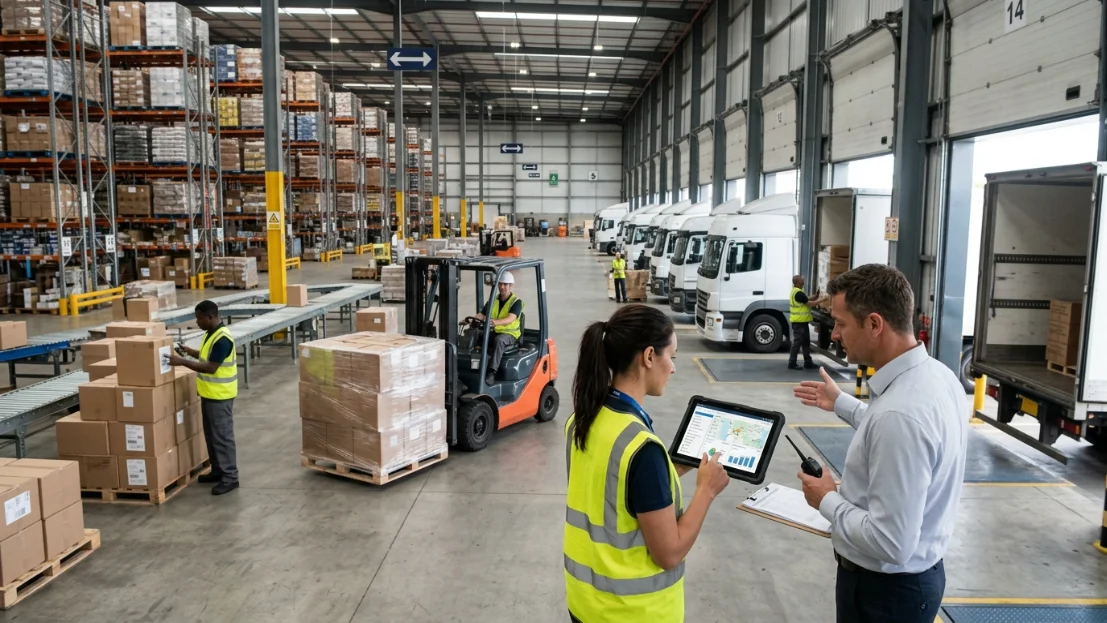
3PL logistics means that businesses transfer certain or all of their transportation, storage, distribution, order preparation and similar logistics processes to professional service providers by outsourcing. The term 3PL here is an abbreviation for the definition of third party logistics and corresponds to third party logistics in Turkish. In this model, the manufacturer, seller or brand owner company receives support from a business partner specialized in this field, instead of carrying out logistics activities in-house. Thus, the company has the opportunity to manage certain processes through an expert organization, instead of collecting the entire operational load directly within its own structure.
3PL logistics should not be considered only as a product transportation service. Because in many businesses, logistics processes consist of a broader structure ranging from product acceptance in the warehouse to order picking, from shipment planning to delivery management. If this structure cannot be established within the company or if it becomes difficult to manage due to growing business volume, the 3PL model becomes an important solution. This model can provide significant convenience, especially for businesses that increase their operational volume, distribute to different regions, and want to establish a more professional flow on the stock and shipment side.
One of the main reasons why this approach is valuable is the transfer of expertise. Logistics operation is a separate planning, control and coordination area in itself. Many topics such as vehicle usage, warehouse flow, order density, delivery time, return processes and service level must be managed simultaneously. The 3PL model provides the business with a more controlled operating basis, thanks to the involvement of a structure that has experience in these areas. This not only facilitates daily operation, but also supports the establishment of a more balanced structure in terms of cost, speed and service quality.
Especially for businesses in the growth period, 3PL logistics is remarkable in terms of flexibility and scalability. The company can more easily adapt to changing order volume and distribution needs without being limited to its own resources. In addition, it becomes easier to follow, report and plan processes more regularly. In structures supported by logistics programs, this visibility becomes stronger and the business can monitor the process more consciously, even in the outsourced model.
Basic Structure of 3PL Logistics Concept
The basic structure of the 3PL logistics concept is based on a business separating its logistics processes from its main field of activity and carrying out this business through professional outsourcing. The basic logic here is that the company works with a third-party structure specialized in this field, rather than undertaking the entire operational burden alone. While this structure sometimes covers only storage and distribution, it can sometimes include broader areas such as order picking, packaging, loading, transportation and delivery. In other words, the 3PL model does not consist of a fixed and uniform service, but rather a logistics support structure shaped according to the needs of the business.
The basis of this concept is task sharing. While the business that owns the product focuses on its own core activities such as sales, production, marketing or customer relations, certain parts of the logistics operation are managed by an outsourcer. Thus, the company can access logistics capability without having to make all the investments in warehouses, vehicles, teams and operations management. The main point here is not to delegate logistics in a completely uncontrolled manner, but to clearly define task boundaries and carry out the process in a measurable manner.
In the 3PL structure, the information flow between the service provider and the working company must be strong. Information such as how fast the order is falling, which product is concentrated in which region, which delivery model is preferred and in which areas there are deviations should proceed smoothly between the two parties. If this relationship remains only at the load delivery level, the efficiency of the model will be limited. Therefore, the basic structure of 3PL logistics is based not only on outsourcing but also on coordination and process harmony.
Another fundamental element is economy of scale. Companies that provide 3PL services generally create a certain operational experience and infrastructure because they manage logistics processes for more than one customer. This infrastructure can create an advantage for businesses that may have difficulty investing at the same level on their own. However, for this advantage to emerge, service scope, performance expectations and process responsibilities must be clearly defined from the beginning. The basic structure of the 3PL model works well only when these boundaries are drawn correctly.
Scope of Services Offered in 3PL Logistics Model
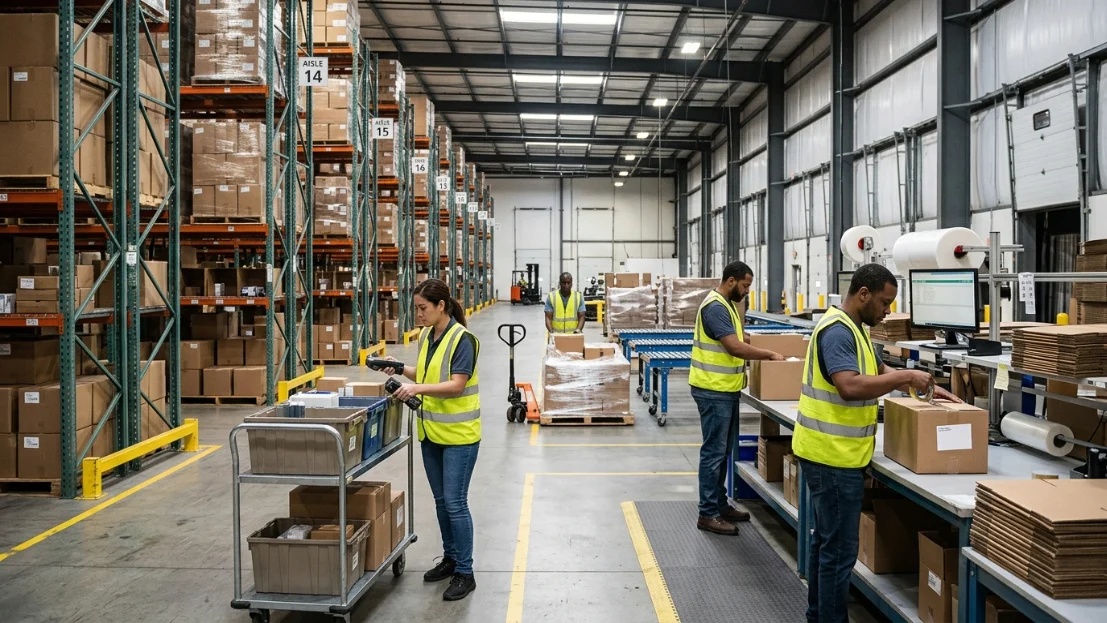
The scope of services offered in the 3PL logistics model does not only consist of transporting the product from one point to another. Most often, this model includes many areas such as warehouse management, stock tracking, order picking, packaging, shipment preparation, distribution planning, delivery organization and return processes. Depending on the needs of the business, some companies only receive transportation support, while others may include end-to-end logistics operations within this structure. Therefore, 3PL service scope does not depend on a single pattern; It may expand depending on the operation structure.
Storage service is one of the most common areas of this model. Storage of products to certain standards, regular management of entries and exits, collection according to order and preparation for shipment have an important place within the scope of 3PL. Especially in e-commerce, retail or multi-product sales structures, warehouse management means more than just finding space. It requires speed, accuracy and traceability. The 3PL structure can help carry out this process on a more professional basis.
Transportation and distribution organization are also important parts of the scope. Which vehicle, which route, in which order and with which delivery model the product will move is not just a matter of field movement, but also a matter of planning. In the 3PL model, this planning may also be included in the service. Thus, it becomes possible for the shipment to arrive on time, to establish a more balanced delivery structure, and to manage the operational intensity in a more controlled manner. This scope offers a significant advantage, especially for businesses serving different regions.
In some 3PL models, reporting, performance tracking and process analysis are also part of the service. When data such as which orders are delivered on time, which deliveries are experiencing deviations, and which product groups have an increased error rate are regularly monitored, the outsourced operation becomes more visible. As the scope expands, 3PL can become not only an implementer but also a business partner that contributes to the quality of the operation. Therefore, when evaluating the scope of service, not only the physical work but also the information and control side should be taken into account.
The Effect of 3PL Logistics Approach on Operation Processes
The first effect of the 3PL logistics approach on operational processes is that it ensures a more balanced distribution of the workload. When a business carries out all logistics processes in-house, serious pressure can occur on both the infrastructure, human resources and daily planning sides. Especially when order volume increases, it becomes easier to create bottlenecks in warehouse, shipping and distribution areas. The 3PL model, on the other hand, relieves the burden on the operation by transferring certain parts of these areas to the expert structure. Thus, the company can focus more on its core business.
The second important effect is seen in operating speed. Speed here doesn't just mean faster delivery. Preparing the order, completing the loading, planning the shipment and ensuring that the process progresses with fewer disruptions are also part of this speed. When the 3PL structure is established correctly, it can ensure more regular management of repetitive work. This makes the overall operation flow more stable. However, for this to happen, the service provider must not only offer capacity but also establish process discipline.
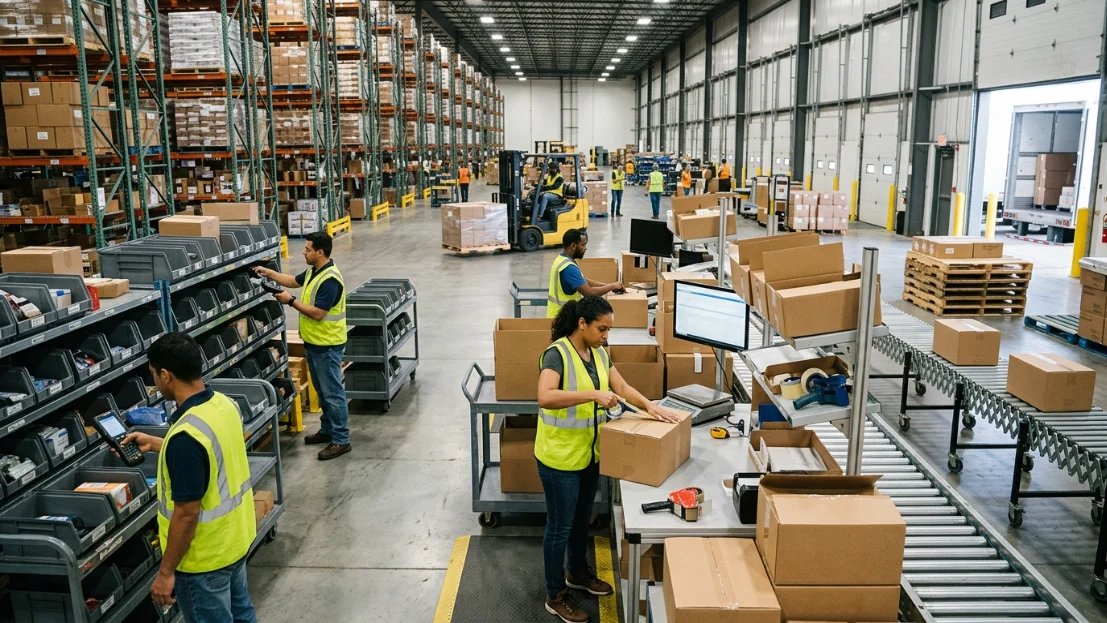
The impact on cost management is also notable. It is not easy for every business to establish its own warehouse, expand its vehicle structure, establish a team and manage them sustainably. The 3PL approach can offer a more flexible structure to the business by making some costs variable. But this does not automatically mean that it will give cheaper results in every case. The real value comes when the cost becomes more predictable and manageable. Therefore, the 3PL effect should be evaluated in terms of cost control rather than cost reduction.
There are also significant impacts on service quality. A properly established 3PL model can support order accuracy, delivery consistency, and process visibility. However, if roles and responsibilities are not clear, information flow is weak, or performance expectations are not defined from the beginning, service quality may fluctuate. Therefore, the impact of the 3PL approach on operational processes depends not only on the capacity of the provider but also on the clarity of the established business model. In a healthy functioning model, the business can establish a more agile, more scalable and more controlled logistics structure.
Points to Consider When Evaluating the 3PL Logistics Model
The first thing to consider when evaluating the 3PL logistics model is to clarify which need the business really wants to solve. For some companies, the problem is insufficient warehouse space, for some it is delivery organization, and for some it is the inability of the operation to keep up when the order density increases. Without this need being clarified, the 3PL model remains just a general outsourcing decision. However, for the model to be efficient, it must be clearly defined which process will be carried out more efficiently with external support.
The second important point is that the scope of service is clear. Which processes will be carried out by the service provider, which areas will remain within the company, which data will be shared and the criteria by which performance will be measured must be determined from the beginning. If this framework is not clear, areas of responsibility become blurred and disagreements arise in the process. Task boundaries must be clearly drawn, especially in areas such as warehouse, order preparation, delivery and returns.
Another point of attention is the flow of information. The 3PL model is not just physical operations support. It is also the relationship between data, reporting and visibility. If order information is not shared on time, stock data is inconsistent, or delivery results are not monitored regularly, the efficiency of the model decreases. For this reason, control should not be lost in outsourcing, on the contrary, data-based visibility should be established more strongly. Information standards are as important as communication channels for the healthy management of the process.
Finally, performance evaluation should be done regularly. Without monitoring indicators such as service level, on-time delivery, order accuracy, deviation rate and cost impact, it cannot be understood whether the 3PL model provides real benefit to the business. Outsourcing alone does not mean success. Success is possible by establishing a structure that truly contributes to the goals of the business and works sustainably. Therefore, when evaluating the 3PL model, the decision should be made not only based on the moment of need, but also on long-term operation quality.