
What Does Air Waybill (AWB) Mean?
Air waybill is the basic transportation document used in the shipment process of cargo transported by air. In international practice, it is referred to as AWB, which is an abbreviation for Air Waybill. This document is one of the most important records of the transportation relationship between the sender, carrier and receiver. It includes where the shipment originates from, where it is going, what is being transported, how many parcels there are, weight information and basic details that need to be taken into account during transportation. Since speed and accuracy are very important in air cargo transportation, AWB is not just a document. It is also the main source of information that ensures the healthy progress of the operation.
Air transportation has a faster but more precise flow than sea and road transportation. Flight plan, cargo acceptance time, security checks, customs procedures and delivery organization at the destination station are tightly interconnected. Therefore, even a small error in the document can affect the entire chain. Incorrect recipient information, incomplete product description, incorrect weight record or incomplete airport information may cause the cargo to be held up, processed incorrectly or incur additional costs. Therefore, AWB is not only the document that initiates transportation in air cargo operations, but also the basic record that directs the entire process.
Another point that increases the importance of air transport is traceability. The shipment goes through many stages, from cargo acceptance to flight, from the destination station to delivery organization. In these stages, everyone acts with the information on the same document. The warehouse team, operations team, customs staff, ground services personnel and units that follow the delivery process are based on the same data. This makes the accuracy of the document critical. Particularly for businesses using logistics software, regular and complete entry of AWB data increases operational visibility and enables errors to be noticed earlier.

The Function of Air Waybill in the Transportation Process
The first function of the air waybill in the transportation process is to clearly identify the shipment. Thanks to this document, it becomes visible to whom the cargo belongs, on whose behalf it is sent, from which point it will be transported to which point, and under what conditions the transportation will be carried out. In this way, every team involved in the operation works with the same basic set of information. The existence of the document indicates that the transportation is carried out within the framework of certain rules, not randomly.
The second important function is to create a reference point during transportation. The information on the AWB is taken as basis when the shipment is accepted, prepared for the flight, transferred and processed at the destination. In other words, the document is not prepared once and left aside. It is rechecked and reused at every stage of the process. In this respect, AWB is an operating document that lives throughout the movement of the shipment.
Another function of the document is to ensure information harmony. In order to prevent different teams from making different comments during the transportation process, product description, number of boxes, weight information and special processing requirements should be written clearly. If these fields are left missing or unclear, confusion will arise as to how the load will be handled. This may have more serious consequences, especially for products that are sensitive, perishable or require special control.
AWB also allows the transportation process to be recorded. Which shipment departs on which flight, which destination it reaches, and which parties it is processed between, can be tracked more systematically through this document. This layout not only provides ease of operation. It also creates an important infrastructure for subsequent controls, inspections and performance evaluations.
Basic Information Contained in the Air Waybill
The primary information contained in the air waybill is the sender and receiver information. The sender's name, company information, address and contact details and the recipient's information form the basis of the document. If these fields are missing or incorrect, it can cause serious confusion in the final stage of delivery. Especially for international transportation, country, city and station information must be entered completely.
Another important group of information is the physical properties of the load. How many boxes there are, total gross weight, dimensions and product description must be clearly stated on the AWB. Since weight and volume are very important in air cargo, the accuracy of these fields is important not only for information but also for cost and capacity planning. Incorrectly entered weight or volume information may cause problems in pricing and may also disrupt the operation plan.
The document also includes information about the transportation route. The origin, destination, relevant airports and carrier information show the route through which the process will proceed. This data becomes much more important, especially in transit shipments. Because incorrect route information may cause the shipment to be diverted to a different line or put on hold.
Special notes and operational explanations may also be included on the AWB. This field indicates whether the product requires special handling, whether there is a situation that needs attention, and whether some checks need to be carried out beforehand. This section is critical for the operations side. Because there may be a need for additional explanation for any non-standard load.
In some cases, pricing and payment information is also considered within the scope of the document. These areas affect the financial side of the transportation and are important for the operation between the parties. However, the main priority in terms of operational quality is the completeness of the information that correctly identifies the shipment and directs its movement properly.
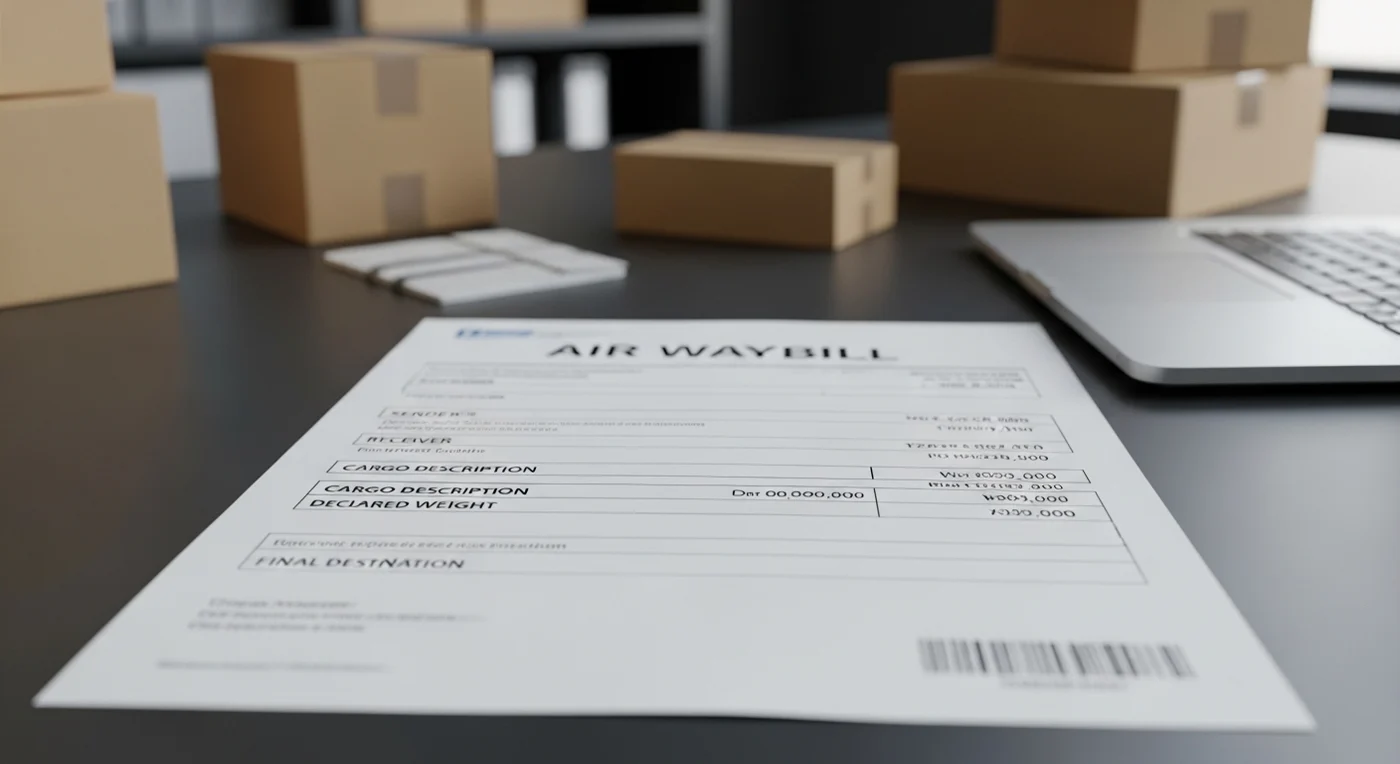
Use of Air Waybill in Air Cargo Operation
The use of air freight in air cargo operations is first seen at the load acceptance stage. When the shipment is received, the compatibility of the information on the document and the physical load is checked. If the number of boxes, product description, weight and recipient information do not match the actual load, the process may stop at the very beginning. That's why AWB is at the heart of the admissions process.
After load acceptance, the document is used in operation planning. Based on this information, it becomes clear which load will be connected to which flight, at which station it will be processed and in what time period it will be prepared. Document error can cause major delays, as it is critical for every shipment to be connected to the correct flight, especially in busy operations. That's why AWB accuracy is considered one of the basic elements of time management in air cargo units.
Another area where the document is used is customs and document control. In international transportation, the shipment must be complete not only physically but also in terms of documents. If the information on the AWB is not compatible with other documents, the examination may take longer. This prevents the shipment from moving on time. On the operations side, there is a direct relationship between document accuracy and speed.
AWB is also actively used at the destination. This document determines whether the shipment has reached the correct station, how the delivery preparation will be made, and what information will be conveyed to the recipient. So AWB is not just a form used at the exit. It also ensures correct management of the load upon arrival. In this respect, the document is a basic reference that is effective from the beginning to the end of the air cargo operation.
As digital processes become more widespread, AWB management has also become more systematic. In structures that work integrated with logistics software, the data on the document can be used more effectively in tracking, planning, reporting and control processes. This both reduces the risk of error and helps the operations team make faster decisions.
Points to Consider While Preparing Air Waybill
The first issue to be considered when preparing the air transport note is data accuracy. Sender and recipient information, airport details, product description, number of parcels, size and weight information must be complete and consistent. Even a single incorrect information in the document may cause the cargo to be processed incorrectly. Therefore, even if it is prepared under speed pressure, accuracy should never be put in the background.
The second point of attention is that the product description is written clearly. Too general statements weaken the operation. It should be clearly stated what the transported product is. This is important for both security controls and applications during the transportation process. The clearer the definition, especially for loads that require special handling, the more smoothly the process goes.
Weight and measurement information should also be entered carefully. Capacity and pricing in air cargo are closely related to these data. Incorrect measurement or weight recording distorts both the operational calculation and the cost side. Therefore, product measurements should be written based on verified data, not guesswork.
The compatibility of the document with other documents should not be overlooked. The information on the AWB with the invoice, packing list and other shipping documents must be consistent with each other. If there are differences between the documents, there may be a delay in the process. Therefore, document editing means ensuring the integrity of the document, not just filling out a single form.
Finally, a control mechanism should be established. Especially in busy companies, verifying the document prepared by a single person with a second check reduces the error rate. Standard control steps, mandatory field verification and systemic warnings increase the quality of operation. Small mistakes made while preparing the air transport can turn into major problems during the transportation process. On the other hand, a carefully prepared document ensures that the air cargo operation progresses faster, safer and more orderly.
Time management plays a critical role in transportation operations. Correct understanding of the concepts used, especially in shipping processes, ensures sound planning. At this point, reviewing the content titled What Does ETA, ETD, ATA and ATD Mean, where we discuss in detail what the terms ETA and ETD mean, will help you understand the process more clearly.