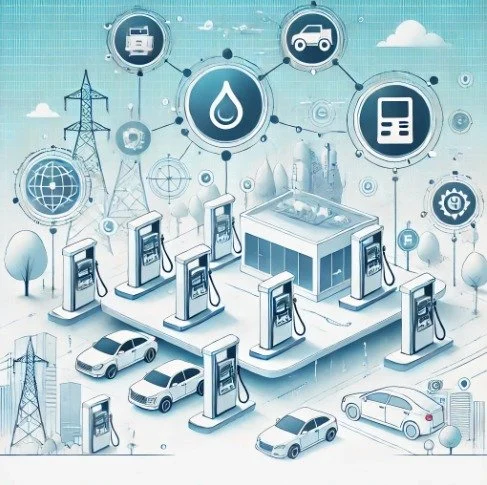
Fuel integrationsis a system created by combining vehicle tracking systems with fuel stations or fuel card providers. Thanks to this integration, businesses can track their vehicles' fuel consumption, expenses and other fuel-related data in real time.
Benefits of Fuel Integrations
Reducing Fuel Costs:
- Fuel Consumption Analysis:By analyzing the fuel consumption of vehicles in detail, abnormal consumptions can be detected and necessary precautions can be taken.
- Route Optimization:The most suitable routes can be determined to reduce fuel consumption.
- Preventing Speeding:Since fast driving increases fuel consumption, fuel savings can be achieved thanks to features that prevent speed limit exceeding.
Transparency and Control:
- Fuel Purchase Information:Information such as which vehicle received how much fuel from which station is recorded in detail.
- Preventing Unauthorized Use:By preventing unauthorized use of fuel cards, situations such as theft are prevented.
Increased Productivity:
Maintenance Planning:Thanks to fuel consumption data, vehicle maintenance planning can be done more effectively.
Reporting:
Detailed Reports:The performance of businesses is evaluated by creating detailed reports on issues such as fuel consumption, expenses, and mileage.
Working Principle of Fuel Integrations
Fuel integrations generally work with the following steps:
- Data Collection:While fueling the vehicles, data is collected from the systems at the station or from fuel cards.
- Data Transfer:The collected data is transferred to the vehicle tracking system.
- Data Processing:The system processes incoming data and creates meaningful reports.
- Reporting:Thanks to these reports, business managers analyze fuel consumption, expenses and other relevant information.
Advantages of Fuel Integrations for Businesses
- Cost Control:By controlling fuel costs, the profitability of businesses increases.
- Productivity Increase:Efficiency increases by optimizing business processes.
- Carbon Footprint Reduction:By reducing fuel consumption, environmental awareness increases.
- Transparency:Reliability increases thanks to transparent recording of transactions.
Additional Information:
- Fuel Card Integration: Integration of contracted fuel cards and vehicle tracking systems.
- Gas Station Integration: Establishing a direct connection with the systems of fuel stations.
- Data Analysis: Providing special solutions to businesses by analyzing the collected data in detail.
Conclusion
Fuel integrations are an important tool that helps businesses optimize their logistics processes and reduce costs. Thanks to this integration, businesses should better understand their fuel consumption, control their costs and increase their efficiency.
Thanks to Evren Bilgisayar systems integration, businesses can track the fuel consumption, expenses and other fuel-related data of their vehicles in real time. You can contact us to get information about fuel integrations.