
How Should Parcel Distribution Operations be Managed?
Parcel distribution operations is a field of logistics management that includes the planned delivery of small and medium volume shipments to multiple delivery points. The difficult part of the process is not just installing the packages into the tools. The real challenge is to read the order density correctly, allocate delivery areas evenly, use vehicle capacity efficiently and keep the uncertainties in the field under control. Late delivery of a package often looks like a single delay. However, many stages such as address verification, route planning, vehicle loading, driver routing and delivery registration work interconnected in the background. When one of these connections weakens, the entire flow is affected.
This process becomes much more sensitive, especially in companies that engage in e-commerce, retail distribution, dealer shipment and urban delivery. As the number of orders increases, it becomes difficult to make manual decisions for each shipment. When deliveries need to be made to dozens of different neighborhoods and hundreds of different addresses on the same day, unplanned work quickly creates chaos. Vehicles are loaded unevenly, some routes become more congested than necessary, some drivers face time pressure, and there is a feeling of delay on the part of the customer. Therefore, in order to establish a successful structure, parcel distribution operations should be viewed as a measurable and improvable system, not as a daily job.
Visibility is very important here. It should be clearly tracked when the order was prepared, which vehicle it was assigned to, in what order it will be delivered, and whether the delivery was completed. When the process is left solely to the experience of the driver in the field, management is late. On the other hand, companies using logistics programs can control the distribution flow at an earlier stage. This allows you to quickly see which areas are congested, which vehicles are delayed, and which deliveries are at risk. This visibility not only makes daily operation easier. It also reveals the source of recurring problems.
A well-executed distribution structure provides cost advantage to the company, balances delivery time and strengthens customer satisfaction. When the latency rate decreases, the pressure on customer service decreases. When vehicle usage is balanced, more deliveries can be made with fewer trips. When delivery data is monitored regularly, more accurate decisions are made by the management. Therefore, the correct management of parcel distribution operations determines not only the order in the field but also the overall service quality of the company.
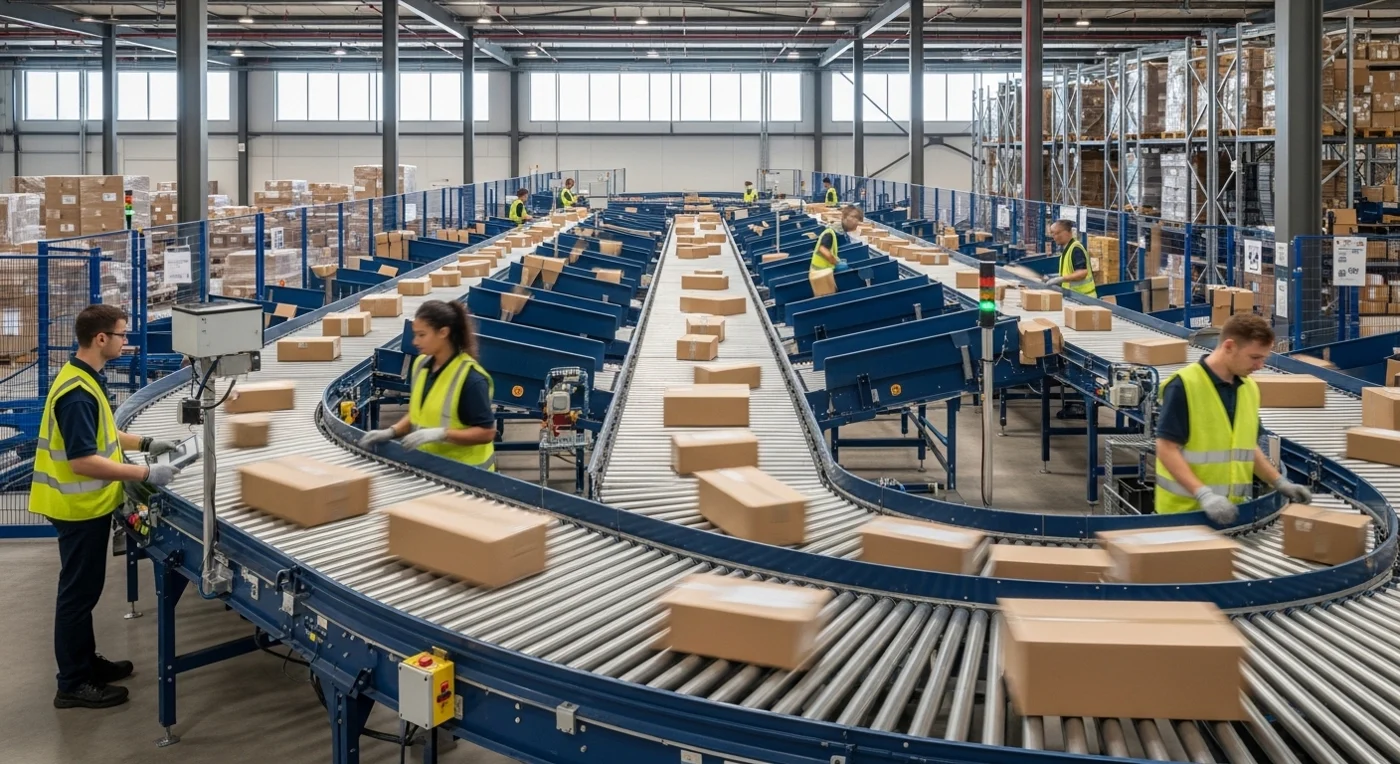
Operation of the Parcel Distribution Process
The process begins with the order being received into the system, but the most important part in terms of operation is making the order suitable for distribution. After the order is created, the product is prepared, packaging is completed and basic information about the shipment becomes clear in the system. At this stage, address, contact information, region, delivery type and priority level must be defined correctly. Because many problems experienced in the field are caused by incomplete or incorrect records in the initial information entry. Wrong phone number, missing house number or unclear location information will extend delivery time.
The next step is parsing. Orders are clustered by region, delivery density, delivery time and daily capacity. The goal here is not just to bring together packets that will go in the same direction. The aim is also to balance the workload. While some regions produce deliveries that can be completed in a short time, in some regions the time per delivery may be longer due to traffic, difficulty of access or building density. For this reason, not only the map but also field experience should be taken into account when parsing.
Then the route and vehicle plan comes into play. At this stage, it becomes clear which order group will be delivered with which vehicle, which stops will be completed first and how the daily delivery order will be established. The mistake made here directly affects intraday efficiency. A route prepared in an improper sequence can lead to unnecessary mileage, excessive fuel consumption and delayed delivery. The stronger the planning, the less pressure on the driver in the field.
The loading phase is also a critical part of the process. It is not enough for the packages to just fit inside the vehicle. It must be placed in accordance with the delivery order. When the first parcel to be delivered is left behind, the driver loses time at each stop. Even a few minutes of loss during the day disrupts overall performance. Therefore, the layout at the warehouse exit directly determines the field speed.
After the delivery starts, the process requires instant tracking. Customer absence, incorrect location information, traffic congestion or pickup delay may require the plan to be revised during the day. Successfully functioning structures are those that not only create routes in the morning but also manage the changes that occur during the day. The process does not close upon completion of delivery. Shipments that are completed, failed, and need to be rescheduled are separated. Thus, stronger data is generated for the next day.
Elements Considered in Distribution Planning
The first requirement for planning is clean data. An order with poor address information will cause problems even within the best route. If the phone number is missing, the driver cannot reach the customer. If the location is uncertain, the vehicle wastes unnecessary time. Therefore, the accuracy of delivery data must be checked before planning begins. In companies that manage a large number of orders, small data errors can quickly turn into major operational problems.
The second important element is zoning. Not every region operates at the same speed. It is difficult to find parking in some districts, security entrances take time in some places, and in some regions the addresses are very close to each other and delivery is completed quickly. Therefore, it is not enough to make a distinction based only on district or neighborhood. A zoning model that takes real field conditions into account gives better results.
Vehicle capacity and driver load should also be planned carefully. The number of deliveries each driver can realistically complete per day is different. Likewise, the package volume that each vehicle can carry efficiently varies. While overloading some routes with work will cause delays, leaving some routes with less work than necessary will waste resources. Correct planning establishes a balanced structure between overload and low efficiency.
The type of delivery also changes planning. Same day delivery, time slot delivery, corporate delivery and standard delivery should not be treated at the same priority level. If priority shipments are lost in the overall rush, the service level decreases. In addition, parcels that require a second attempt, return processes and deliveries awaiting special approval should also be evaluated separately. Handling all orders with a single logic will quickly deteriorate the quality of the operation.
Timing should also not be ignored. A region visited in the morning and the same region visited in the afternoon may not produce the same performance. Areas where workplace deliveries are concentrated, regions where residential deliveries are dominant, and points that experience an increase in orders during campaign periods require different plans. Strong operating companies interpret past delivery data and track which regions achieved higher success at which times. At this point, logistics programs provide important decision support.
Factors Determining Operational Efficiency
The first issue that determines efficiency is the standard process. If each team works in a different way, the results will be dispersed. Sorting the order, loading it into the vehicle, processing the delivery into the system and rescheduling the unsuccessful attempt must follow certain rules. In a non-standard structure, the difference between good days and bad days becomes larger. This reduces manageability.
The second determining factor is the time taken per delivery. If one of the two teams distributing the same number of packages completes the job in a shorter time, this is often due to better planning. When address quality, loading order, zoning accuracy and pre-delivery information are good, the time taken per stop is reduced. This increases the amount of work completed during the day.
Vehicle use is also important for efficiency. If one vehicle is running too light and another is working too hard, the planning is not balanced. Similarly, if in-vehicle loading is irregular, field speed decreases. The number of packages alone is not a sufficient indicator. Ease of in-vehicle access, delivery order and daily route balance should be evaluated together.
Instant tracking directly affects productivity. If it cannot be seen which vehicle is late, which driver entered the busy area, or which deliveries are at risk, management can only intervene at the end of the day. However, when there is visibility during the day, the route can be updated, the region can be rebalanced and customer information can be provided in a timely manner. Efficiency is not just about moving quickly on the field, but also about making the right decision at the right moment.
Another important element is analysis. In which regions delays increase, at which hours delivery success decreases, which drivers perform more balancedly and which delivery types cause more problems should be measured regularly. Improvement that is not based on data will not be permanent. That's why strong companies focus not only on completing the day, but on carrying each day's knowledge to the next plan.
Management of Disruptions During the Delivery Process
The first requirement for managing disruptions during the delivery process is to recognize the problem correctly. Not every delay occurs for the same reason. The customer is not at the address, the address is incomplete, the package is loaded into the wrong vehicle, traffic is heavier than expected, or the driver disrupts the delivery order. When problem types are not separated, the same problem repeats and the root cause remains hidden.
Failed delivery attempts are one of the most common problems. If the customer is not at the address or the delivery time is not suitable, it does not only affect the relevant order. It also disrupts the duration of other stops on the same vehicle. Therefore, pre-delivery information, address confirmation and, if possible, choosing the appropriate time interval reduces this problem. In case of unsuccessful attempts, the shipment should not be automatically postponed to the next day, but should be rescheduled by analyzing the reason.
Incorrect installation also causes serious loss of time. Even if the package is allocated to the right area, if it is placed in the wrong vehicle, the whole plan will be ruined. Barcode verification, vehicle loading control and proper placement in the delivery order reduce this problem. A small mistake made in the warehouse can turn into a major delay in the field.
Traffic and site access problems cannot be completely eliminated, but their effects can be reduced. Areas with constant congestion should be analyzed, alternative delivery times should be considered for areas that cause problems at certain hours and the route plan should be updated accordingly. If the same problem occurs in the same place every day, the problem is in the planning model rather than the driver performance.
Lack of communication also causes problems to grow. If the driver, operations center and customer services cannot access the same information at the same time, the solution slows down. When a problem in the field is reported late to the center, customer notification is also delayed. This creates a loss of satisfaction. For this reason, the management of disruptions experienced in the delivery process should be carried out not only with field reflexes but also with a strong flow of information.
Finally, every malfunction should be recorded systematically. Answers to questions such as how many deliveries were delayed for what reason, in which region the problem was concentrated, on which days the rate of unsuccessful attempts increased, and which package type caused more problems should be collected regularly. In this way, management not only solves the immediate crisis, but also creates a more accurate plan for the next day. Only in this way does a successful structure become permanent.
When parcel distribution operations are managed correctly, the company establishes a more balanced route, better controls delivery time, increases customer satisfaction and makes resource use more efficient. As the number of orders increases, the value of a strong process setup becomes more evident. Therefore, field success should not be left to chance; planning, data tracking and operation discipline should be handled together.