What is Partial Transportation?
Partial transportation is the transportation of loads that do not fill a vehicle or container by themselves, by combining them with different shipments going to the same or nearby route. In this transportation model, each sender is charged only based on the space or weight of his cargo. Thus, lower volume shipments can be carried out economically without the need to rent a complete vehicle or container.
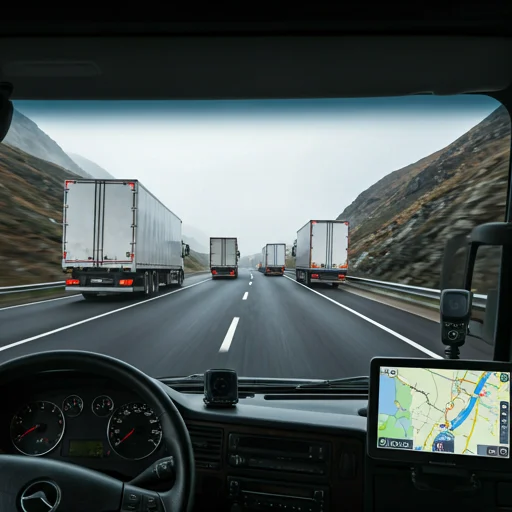
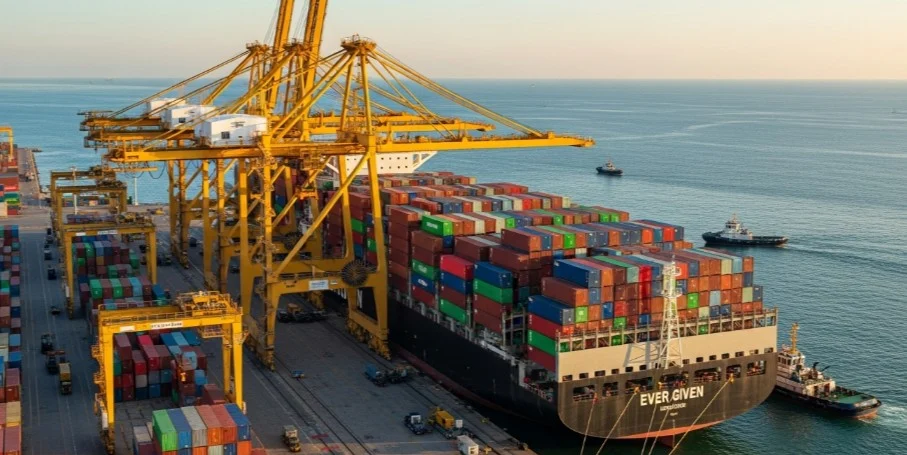
In road transportation, partial loads are generally called LTL, and in sea transportation, they are called LCL. In the industry, the expression groupage transportation is also used to describe the same model. Partial transportation is a suitable option especially for companies that make regular shipments but cannot fill a full vehicle for each shipment.
In order for this transportation model to be carried out successfully, load dimensions, weight information, delivery addresses and special transportation conditions must be recorded accurately. Logistics programs facilitate the planning of loads belonging to different customers on the same vehicle or line, tracking shipment statuses and calculating costs on a shipment basis.
How is Partial Transportation Done?
The partial transportation process is started by obtaining load information. The number of boxes or pallets, width, length and height dimensions of the load, gross weight, packaging style and whether it is stackable are learned from the sender. Special requirements such as forklift, ramp, temperature control or hazardous material transport condition should also be specified at this stage.
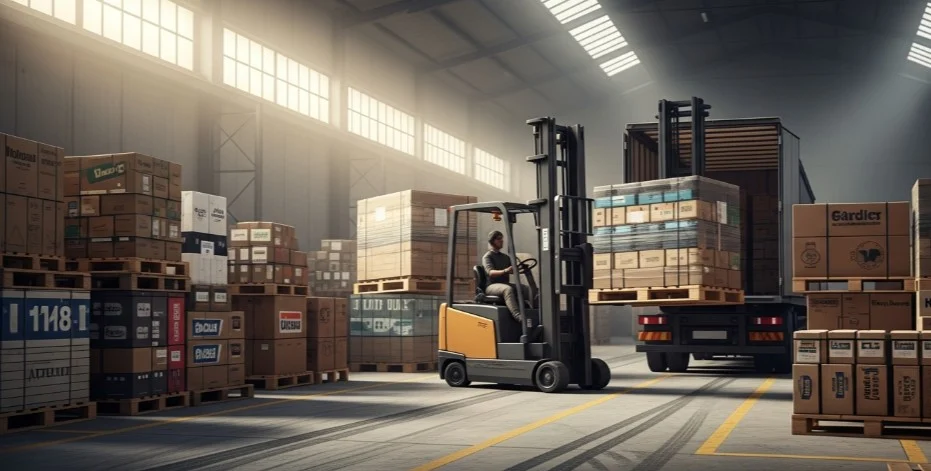
In line with this information, the appropriate line, vehicle and departure date for the load are determined. Shipments can be collected directly from the sender's address or delivered to a collection center. Loads arriving at the collection center are checked, labeled and brought together with other shipments destined for the same route.
In partial operation, loads are generally transported in the following flow: Shipment information is obtained, the appropriate voyage is determined, the load is collected from the exit point, consolidated with other loads at the transfer center and loaded onto the main transport vehicle. The loads are sorted at the center at the destination and delivered to the recipient addresses by planning regional distribution vehicles.
In this process, it is possible to handle the load at more than one point. For this reason, the packaging must be strong, the labels must be prepared correctly and the shipment information must be complete in the system. In particular, deficiencies in the delivery address, contact information or special delivery conditions may cause a delay in the distribution phase.
What are the Advantages of Partial Transportation?
The most important advantage of partial transportation is that the sender pays only for the transport capacity he uses. Instead of renting a full vehicle for a few pallets or parcels, shared capacity is used with other loads going to the same route. This makes the transportation cost more manageable, especially for low and medium volume shipments.
Partial lines with regular departures also allow companies to ship more frequently without accumulating loads. Being able to ship products without waiting for them to fill the entire vehicle can help reduce stock levels and speed up the delivery flow. This allows products to be sent to customers more frequently and in smaller quantities.
Sharing the vehicle capacity between different shipments increases the occupancy rate and reduces transportation with empty space. Combining loads going to the same area into a single vehicle can reduce total vehicle usage and unnecessary kilometers. In this respect, partial transportation is an efficient model in terms of both cost and resource use.
However, partial loads may go through more transfer and handling stages than complete transportation. It is therefore important that fragile items are packaged correctly, the load is secured to the pallet and each item is clearly labeled. The risk of damage, mix-up or delay may increase with loads that are not prepared correctly.
For Which Products Is Partial Transportation Suitable?
Partial transportation; It is suitable for products that can be transported safely on parcels, crates or pallets and that do not fill an entire vehicle. Automotive spare parts, textile products, packaging materials, electronic products, machine parts, printing products and products sent to retail sales points can be transported with this model.
Businesses that ship small amounts at regular intervals can also benefit from partial transportation. For example, a company that sends several pallets of products to dealers in different cities can combine its loads with other shipments going to the same region, instead of planning separate vehicles for each delivery. Thus, vehicle capacity is used more efficiently.
In order to partially transport food, medicine or sensitive products that require a cold chain, the carrier must have the necessary temperature-controlled infrastructure. For hazardous substances, it is important that the product is properly declared, labeled and transported through an accepted line. Not every partial carrier may accept such loads.
Partial model may not always be suitable for products that are very fragile, out of size, extremely heavy or require high security. Because transporting these cargoes together with other shipments and handling them at transfer centers may pose additional risks. For such loads, complete transportation or special vehicle planning may be a safer option.
How is Pricing Done in Partial Transportation?
When pricing partial transportation, the actual weight of the load, its volume, the vehicle space it occupies, the delivery distance and the additional services required are evaluated together. It is not correct to price the cargo based solely on kilogram information. A light but bulky shipment may cost more depending on its weight because it takes up too much space in the vehicle.
In partial road transport, calculations can be made based on volume, weight or loading meter. In maritime LCL transportation, the ton and cubic meter values of the cargo can be compared. A desi account can also be used for domestic shipments. Since the calculation method varies depending on the type of transportation and the tariff applied by the company, the criteria must be clarified before the offer.
For example, for a machine part that has a high weight but takes up little space, the actual weight can be taken as basis. The volumetric value may be higher for plastic products in light but large boxes. A non-stackable pallet may also be charged more than a standard pallet due to the unusability of space above it.
In addition to the main freight, additional items such as fuel difference, remote area delivery, appointment delivery, forklift or lift vehicle need, second delivery attempt, dangerous goods service and insurance may be included in the transportation cost. Therefore, in order to get the correct price, the dimensions, packaging structure and delivery conditions of the cargo must be fully stated at the offer stage.
How is the Delivery Time Determined in Partial Transportation?
Delivery time in partial transportation; The cities where the cargo will be picked up and delivered are determined according to the line used, frequency of flights, number of transfer centers and delivery conditions. Transportation may take shorter on busy lines with regular departures on the same day. On lines operating on certain days a week, the load may have to wait until the next main voyage.
One of the important factors that determine the delivery time is that the cargo reaches the final acceptance time determined for departure. If the cargo is delivered after the closing time of the relevant voyage, it may be delayed to the next exit. Therefore, attention should be paid not only to the estimated transportation time, but also to the collection and consolidation schedule.
Unloading, sorting and reloading operations performed at transfer centers also affect the total time. In international transportation, customs procedures, border gate density and in-country distribution plan are added to these. Additional time may occur for appointment delivery, construction site delivery or shipments requiring special vehicles.
In order to plan the delivery time correctly, the departure date, main voyage, transfer points and final distribution stage should be followed together. Thanks to logistics programs, the steps of cargo collection, main transportation, transfer and delivery can be monitored. In this way, possible delays can be identified earlier and up-to-date information can be given to the sender and receiver.