What Does Control Tower Mean in Logistics?
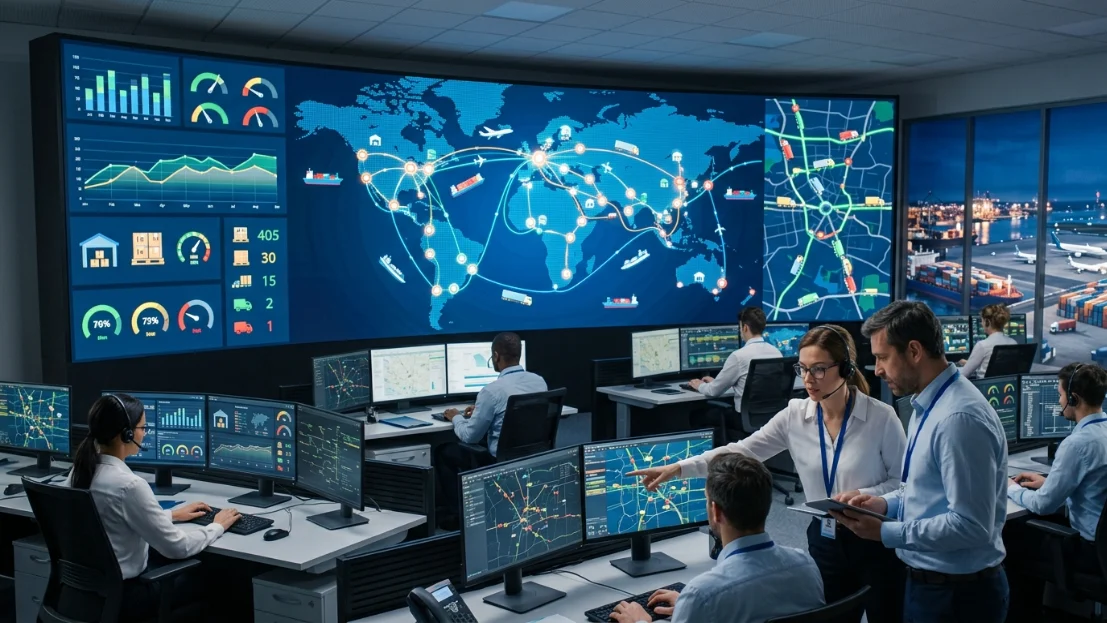
In logistics, the control tower is the management structure that enables operations ranging from order to delivery to be monitored, evaluated and directed when necessary, from a central perspective. This concept is not limited to just shipment tracking in the classical sense. The main purpose; The aim is to make many different processes such as warehouse movements, shipment flow, transportation plans, delivery performance, exceptions and customer impact visible in a single center. This way, the business can see more clearly not only what happened, but also why it happened and what needs to be done next. In this respect, the control tower should be considered not only as a tracking but also as a basis for decision-making and coordination in logistics.
In traditional logistics management, information is often scattered in different departments. The warehouse monitors its own data, the transportation team looks at its own flow, customer services follow the delivery information from different places, and managers often try to understand the process with reports prepared later. Although this structure may seem manageable up to a certain point in small-volume operations, it creates serious difficulties as business volume increases. Because scattered data causes delays to be noticed late, the source of the error not to be clearly understood, and teams to make different interpretations for the same problem. The control tower approach emerges precisely to tidy up this messy structure.
The main value of the control tower structure is that it provides visibility while the process is ongoing. There's a big difference between finding out when a delivery is late at the end of the day and seeing the delay trend while it's in progress. Likewise, when the order preparation time in a warehouse begins to lengthen, being able to see early how this will be reflected in the shipment output and delivery time creates a serious advantage for the operation. The control tower is therefore important for live operations management as well as retrospective analysis. The aim is not only to collect reports, but also to keep the pulse of the operation in real time.
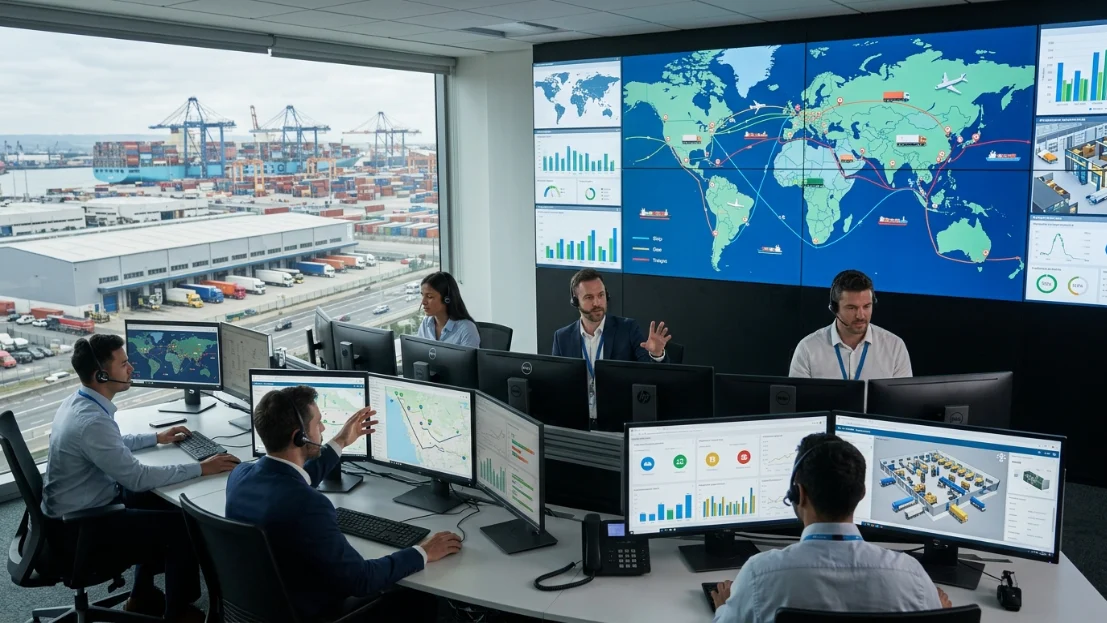
This approach becomes especially important in structures with multiple locations, multiple partners or high order volumes. Because as the operation expands, it becomes difficult to manually control individual processes. A small deviation at one point can turn into a big problem in another region. For example, a delay in a warehouse can affect vehicle throughput; slippage at the vehicle exit may disrupt the delivery order; Deviation during delivery may lead to customer dissatisfaction. The control tower helps to see this chain as a whole. Therefore, the structure is not only a comfort zone needed when the operation grows, but also a strategic tool that makes the complex logistics structure manageable.
Visibility becomes much stronger, especially in control tower structures supported by logistics software. Because order, warehouse, shipment, route, delivery and exception information can be monitored in a common flow instead of being scattered on different screens. This provides a clearer picture for both managers and operations teams. As a result, the control tower stands out as the structure that makes the difference between "seeing what happens" and "managing what happens" in logistics.
Equivalent of the Control Tower Concept in the Logistics Process
The concept of control tower in the logistics process means that different parts of the operation can be monitored within the same framework and the relationship between these parts can be established more clearly. In logistics, not every process has meaning on its own. Preparing the order on time, leaving the vehicle on time, completing the delivery as planned and conveying the correct information to the customer are interconnected steps. The control tower treats these steps not as independent from each other, but as links in a single operation chain. Thus, process management can be done not only on a department basis, but also from an end-to-end perspective.
In practice, this concept often corresponds to central visibility. However, visibility here does not only mean seeing information on the screen. The important thing is that the information seen can be read in the correct context. For example, simply knowing that a shipment is delayed is not enough. It is necessary to understand whether that delay is due to warehouse preparation, vehicle plan, route density, address problem or customer-related waiting. Therefore, the control tower is a structure that not only shows the situation but also helps interpret the situation.
The equivalent of the control tower in the logistics process is also a unifying management model. Because in most companies, warehouse, shipping, distribution, customer service and management teams work from different perspectives. If these different perspectives are not based on common data, the difference in interpretation grows in the process. The control tower ensures that the same process is evaluated by everyone on a common basis. In this way, not only the visibility of the data but also the consistency of the decisions increases. It is difficult to make quick and accurate decisions in structures where everyone acts from a different perspective; common visibility makes this easier.
Another equivalent of this concept is exception management. Not every logistics operation goes as planned. Situations such as last minute order changes, preparation delays, vehicle malfunctions, traffic congestion, delivery deviations or customer-related disruptions may occur. The control tower creates value at this point. Because when the process goes out of plan, it makes it more visible which step is affected, how much this effect can grow and where the first intervention should be made. This creates a more proactive, rather than reactive, management opportunity in logistics.
Basic Processes Followed in the Control Tower Structure in Logistics
The first of the basic processes followed in the control tower structure in logistics is order flow. From the moment the order enters the system, it is tracked which stage it moves to, when it is directed for preparation, with what priority it is handled, and when it is linked to the shipment plan. Because even the slightest delay in the order flow can affect all subsequent links. If the order process is not clear, it becomes difficult to understand the root of the problems on the warehouse, shipping and delivery side. Therefore, in the control tower structure, the order is not only the starting point but also the main data that determines the direction of the entire flow.
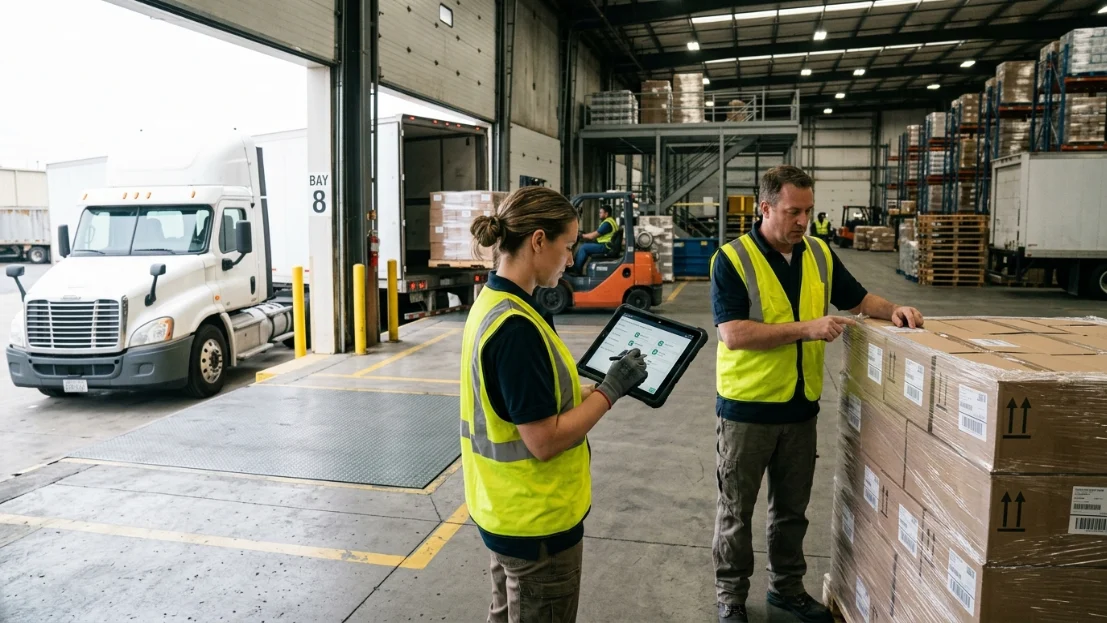
The second basic process is warehouse movements. The location of the product in the warehouse, collection process, packaging, preparation time, orientation to the loading area and readiness for shipment are monitored in this structure. Although in most businesses the delay problem is associated with external transportation, a significant portion of the total operation time occurs within the warehouse. If the product is not available on the shelf, preparation takes longer than expected, or jams occur in the loading area, the control tower should make these areas visible early. Because any problem that goes unnoticed on the warehouse side may turn into a larger delivery deviation in the following stages.
The third process is the shipment plan and transportation flow. Vehicle assignment, departure time, route structure, delivery sequence, transportation model and movement on the road are evaluated in this area. The purpose here is not just to see the location of the vehicle. It also means understanding how harmoniously the planned flow and the actual movement progress. A vehicle may be delivered on time, but if the delivery order is unbalanced, problems may still occur. The control tower should evaluate the transportation process not only as location tracking but also as plan performance.
The fourth basic process is the delivery phase. This includes on-time delivery, delivery to the correct address, unsuccessful attempts, redirection, delivery confirmation and closing status. Because customer experience is exactly shaped here. Processes that go very well internally may be perceived negatively due to weakness on the delivery side. For this reason, delivery in the control tower structure should be monitored not only as the last stage, but also as the area where the entire operation quality is reflected.
The fifth process is exception and deviation management. This is one of the most valuable areas of the control tower. Delayed preparations in the warehouse, vehicle departures beyond the planned time, off-route congestion, regional delivery problems, customer-related waits or certain types of recurring errors become visible in this context. The aim here is not only to record the problem, but also to understand the impact of the problem early and intervene before it spreads in a chain. That's why exception tracking is at the heart of the control tower structure.
The Effect of the Control Tower Approach on Operational Visibility
The first major impact of the control tower approach on operational visibility is that it turns fragmented data into a meaningful whole. In logistics, data disorganization is as serious a problem as lack of data. One information exists in the warehouse, another data is on the transport screen, delivery data is kept in a different place, and customer information is in another team. In this case, each department knows its own job, but it becomes difficult to see the total picture. The control tower approach gathers this dispersed structure and makes the different layers of the operation readable within a single management view.
The second effect is seen in awareness of timing. Operational visibility should answer not only the question “what happened” but also “when it happened”. More controlled decisions can be made when information such as which step is proceeding later than planned, how much the delay has grown, and which other stages this deviation may affect, is visible. In this way, managers can take action when the tendency for disruption begins in the process, rather than after the problem grows.
The third effect is clearer separation of exceptions. Not every delay occurs for the same reason, and not every disruption is of the same severity. Thanks to control tower visibility, it is more clear which problem is a recurring structural problem, which is a temporary problem, and which is customer-related. If all problems are treated the same way without making this distinction, both time loss and wrong intervention will occur. Visibility here means not just showing information, but classifying information in a meaningful way.

The fourth effect is the creation of a common perspective between teams. Communication is strengthened when warehouse, shipping, field and customer services meet in common visibility instead of looking at the same process from different perspectives. Instead of producing different interpretations for the same event, everyone can see the same priority based on the same data. This allows the operation to run more synchronously. The visibility power of the control tower creates value not only for managers but for all parts of the operation.
Finally, the control tower approach moves operational visibility from daily workflow to strategic management. Because recurring deviations, problems related to certain regions, imbalances due to transportation models or warehouse density trends begin to become clearer over time. This allows the business not only to manage today but also to plan the future more accurately. Visibility thus becomes a tool for development, not just tracking.
Points to Consider in Control Tower Structure in Logistics
The first point to consider in the control tower structure in logistics is data quality. Because centralized visibility is only as valuable as the accuracy of the information collected centrally. If order data is missing, warehouse information is updated late, shipment movements appear differently from different sources, or delivery confirmation is unreliable, the control tower may produce an inaccurate table. Therefore, in order to establish a solid structure, data discipline must first be ensured. Centralization of wrong data does not produce correct decisions.
The second important point is to correctly determine which indicators will actually be monitored. Keeping track of all data with the same weight creates confusion, not visibility. Priority should be given to areas within the control tower that make decisions, show deviations and create customer impact. The system becomes more useful when key indicators such as order flow, lead time, output discipline, delivery deviation and recurring problem areas are clearly defined. Structures with unclear priorities create information density but cannot produce management value.
The third point is to connect visibility to action. The control tower is not just a viewing area consisting of screens. It should be defined in advance who will intervene in the deviation seen there, which team will step in at what level of delay, and which exception will trigger which decision process. Otherwise, the structure collects information but cannot give direction. The real benefit occurs when the visible data is connected to the decision mechanism.
The fourth point is team ownership. If the control tower is to be successful, warehouse, shipping, customer services and field teams should not see this structure as just an inspection tool. At the same time, they should see it as a support area that helps them run their own business more healthily. If teams perceive the control tower only as a top management screen, data entry and process discipline may weaken over time. Therefore, the structure must also make sense for daily operation.
Finally, the structure should be considered as a developing model, not a static one. The visibility area that seems sufficient today may be insufficient as the operation grows. A new region, new transportation model, new delivery expectation or increased order density requires a review of the structure. Therefore, the control tower is not a system that is installed once and remains unchanged. As the operation evolves, monitored indicators, alert logics and intervention rules must also be updated. Thus, the control tower becomes a management center that not only protects the current order but can also support the growing structure.