What Does Transportation Management System (TMS) Mean?
Transportation management system (TMS) is a specialized logistics software that helps manage transportation operations in an end-to-end digital environment. It allows you to control the entire process from order taking to delivery confirmation on a single platform. This system is used in companies engaged in road, sea and air transportation; It combines route planning, vehicle tracking, document management and cost analysis.
In transportation operations carried out using traditional methods, the margin of error is high and cost control is difficult. Companies that provide coordination by phone and e-mail; Lost documents, empty runs and late deliveries are common. TMS was developed to eliminate all of these problems. The system automates every step of the operation, minimizing manual intervention.
What Does TMS Do?
TMS provides measurable benefits to the business at every stage of the transportation process. It minimizes human error and keeps the data flow uninterrupted from the moment the order is received until the delivery is completed.
Reduces transportation costs. Thanks to route optimization and consolidation planning tools, fuel consumption and empty voyage rates are reduced. The multi-carrier comparison feature makes it easy to find the most competitive freight rate. Companies using TMS report saving between 10 percent and 30 percent in transportation costs.
Increases supply chain visibility. Thanks to instant cargo tracking and automatic notification systems, customers are informed of every stage of their shipments. Delivery time estimates are updated automatically, and deviations are immediately communicated to the relevant people. This transparency directly strengthens customer satisfaction and loyalty.
Facilitates legal compliance. Documents such as CMR, bill of lading, customs declaration and delivery note are automatically produced within the system. U-ETDS integration, which has become mandatory in Türkiye, can also be met through TMS. Customs delays and risks of criminal sanctions resulting from document errors are eliminated.
Saves time. Manual order entry, telephone vehicle coordination, and manual reports lead to a huge waste of time. By automating these processes, TMS directs the operations team's capacity to more strategic tasks. Average order processing time and customer inquiry traffic are significantly reduced.
How Does TMS Work?
The transportation management system works through four basic interconnected modules. Each module can be used independently; However, when used together, it creates an integrated structure that covers all rings of the operation.
Planning and Order Management
The system automatically receives incoming orders and converts them into transport orders. It creates the most appropriate transportation plan by simultaneously taking into account available vehicles, driver capacities, load weights and delivery priorities. Thanks to capacity optimization, vehicle occupancy increases while empty trip costs decrease. In multi-carrier operations, the system automatically assigns which load will be loaded to which vehicle and conflicts are prevented.
The system automatically redistributes capacity during seasonal load increases. Urgent orders are integrated into existing plans and route and vehicle assignments are updated. This flexibility provides a critical advantage, especially in e-commerce logistics and retail distribution operations.
Route Optimization
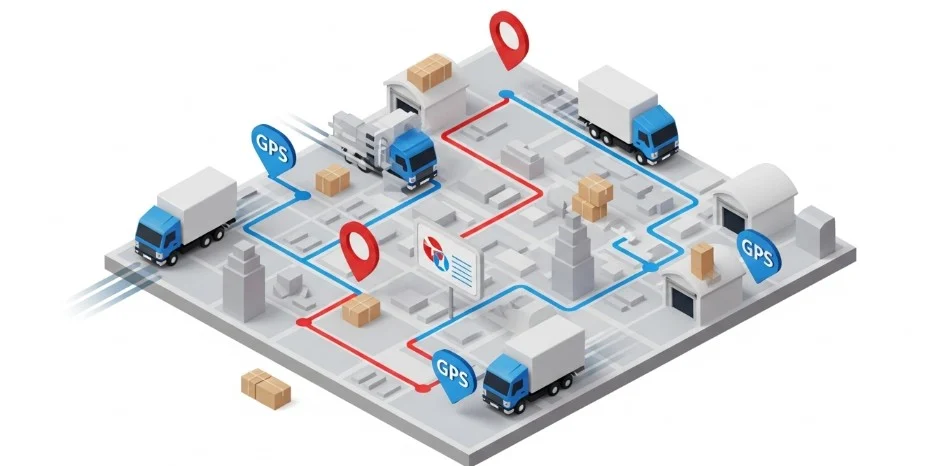
TMS determines the most efficient route by analyzing traffic data, distances, delivery windows, road conditions and fuel costs. In multi-stop distribution planning, this module significantly reduces the cost per km and the total driving time. Daily trip planning for distribution operations within Türkiye is completed within minutes via this module.
Thanks to the dynamic route update feature, instant re-planning can be made according to traffic congestion or weather conditions. The updated route is instantly transmitted to the driver via the mobile application. This feature both saves fuel and increases the on-time delivery rate.
Real Time Tracking
With GPS integration, the instant location, speed and route compliance of the vehicles are monitored. Estimated arrival times are updated automatically; When any deviation occurs, the system sends instant notification to the relevant people. Waiting times at customs crossing points in international transportation are also monitored through this module.
Some TMS solutions offer customers a special tracking screen. When the customer can track the location of his or her shipment from the system, query traffic to the operations team is greatly reduced. When the delivery is completed, confirmation is obtained with a digital signature or photo and the record is automatically processed in the system.
Document and Invoice Management
Transportation documents such as CMR, bill of lading, delivery note and customs declaration are automatically produced within the system. Thanks to e-invoice and e-archive integrations, the document flow is completed completely digitally. Shipping cost calculation, additional fee management and customer invoicing operations are also carried out through this module. Since the smallest error in documents can lead to costly delays in international transportation, automatic production directly eliminates this risk.
Which Companies Should Use TMS?
TMS is necessary not only for large fleets, but also for companies of all sizes that carry out transportation operations on a regular basis. Companies that manage dozens or hundreds of shipments daily and encounter errors and delays due to manual tracking, those who work with more than one carrier and have difficulty comparing costs, those who carry out international transportation and prepare customs documents manually, and those who frequently receive cargo inquiries from their customers and cannot provide instant information, directly benefit from the use of TMS. This includes businesses that want to analyze transportation costs but cannot access the data, and those who manage the operations of different customers simultaneously as a 3PL service provider.
With TMS, international road transportation companies move customs clearance, CMR tracking and multi-point delivery processes to the digital environment. Companies engaged in sea and air transportation carry out bill of lading management and freight calculation through the system. While domestic distribution companies automate daily route planning and vehicle tracking, 3PL companies manage operations for different customers from a single platform.
Small shipping companies can also use TMS without requiring high initial investment through cloud-based modular logistics software packages. In cloud-based systems, the installation process takes anywhere from a few days to a few weeks; This period may be extended in projects that require special integration and customization.
Digital transformation of the logistics sector in Türkiye is accelerating. In this environment where competition is intense, companies that do not use transportation management systems are increasingly at a disadvantage in terms of cost, speed and service quality. TMS is no longer just a choice, it is an operational necessity.