What Does Digital Proof of Delivery Management Mean in Logistics?
Digital proof of delivery management in logistics is the process of creating, verifying, storing and sharing information electronically with relevant parties showing that the product or cargo has been delivered to the buyer. Parts of this evidence may include the recipient's signature, delivery photo, date, time, location, product condition and descriptions. The aim is to ensure that delivery is verified not only by verbal notification but also by subsequently controllable records.
The question of what is digital proof of delivery should be evaluated in a broader context than a simple signature screen. Electronic proof of delivery is a unified record structure that shows to whom, where, when and under what conditions the delivery was made. While only the buyer's signature may be sufficient for some operations, additional verifications such as photographs, documents and descriptions may be required for sensitive, high-value or risk-of-damage products.
In traditional delivery processes, paper documents were signed by the driver, sent back to the operations center, and then archived. This method could cause documents to be lost, arrive late, be unreadable, or be added to the wrong shipping file. The digital delivery record can be transferred to the system as soon as the transaction is completed. Thus, the operation team and the customer can reach the delivery result in a shorter time.
Proof of delivery managed withinLogistics software can be linked to order and shipping records. Thus, it can be clearly seen which customer, order, vehicle, driver and shipment the uploaded photo, signature or delivery document is associated with. This relationship makes it easier to link documents to the correct operations file, especially at high delivery volumes.

What Information and Records Does Digital Proof of Delivery Consist of?
One of the key components of digital proof of delivery is recipient information. The name, surname, position or unit within the institution of the person accepting the delivery can be recorded. In corporate deliveries, the authority of the receiving personnel within the company may also be important. Simply leaving the product to any person at the address may not be considered valid delivery in some contracts.
Signature recording is one of the most common verification methods. The recipient can sign via the driver's or field staff's mobile device. This signature must be retained together with the relevant delivery record. When used alone, the signature must be supported by information such as the name of the recipient and the time of delivery. Otherwise, it may become difficult to determine who the signature belongs to later.
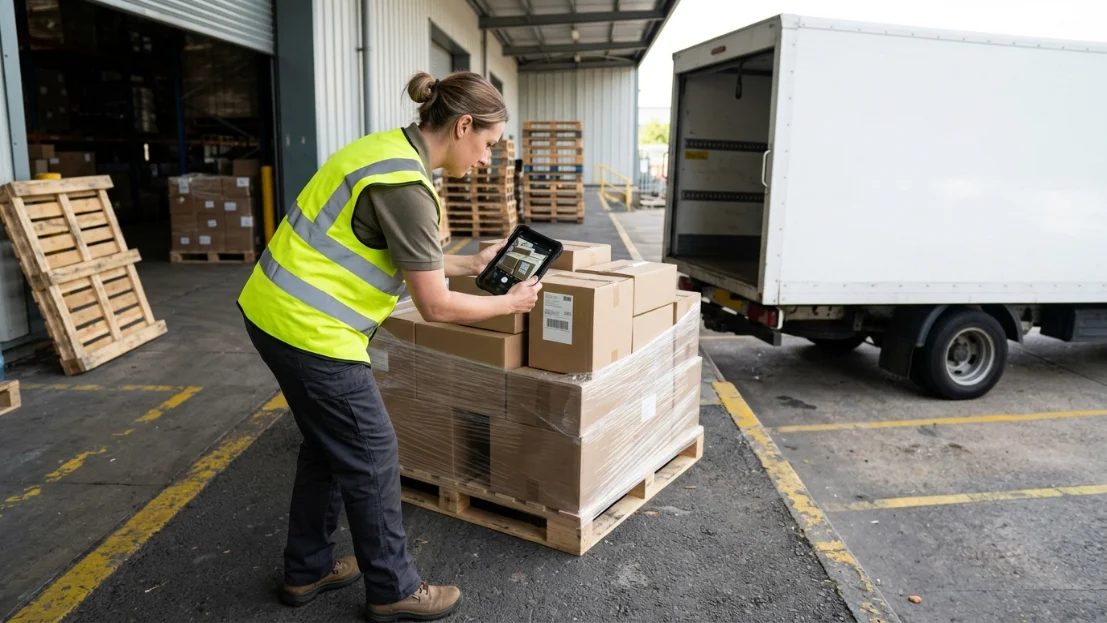
Delivery photo can be used especially in contactless deliveries, products left at a certain point, or operations where the product status must be shown. The photo may show the location where the package was delivered, the condition of the packaging, the drop-off point or the damaged area without showing the person receiving it. Issues such as personal data, security and customer confidentiality should be taken into consideration when taking photos.
Date and time information shows when the delivery was completed. This data can be retrieved automatically from the mobile device's system clock. Manual date entry by the user may increase the risk of inaccurate or backdated recording. Automatic timestamping makes it easy to evaluate whether the delivery was made within the specified time period.
Location information can help verify that delivery is made at the correct address. The location data of the mobile device can be recorded during the transaction and compared to the delivery address. However, location data may not always provide full accuracy due to indoors, closed areas, low signal or device permissions. For this reason, location information should not be considered as definitive evidence on its own, but as an element that supports other records.
Delivered product or parcel information can also be included in the digital delivery document. Order number, product code, number of boxes, pallet quantity, delivered quantity and serial number, if any, can be recorded. When partial delivery is made, it should be clearly stated which products have been delivered and which are missing.
Product and packaging status can be recorded at the time of delivery. Options such as intact, damaged, unpackaged, missing or not accepted can be used. If damage is found, it may be mandatory to add a description and photo. This way, it can be more clearly examined whether the damage was noticed before delivery, during transportation or during the receiving process.
Delivery notes also complete the evidence structure. Recipient's explanation, delivery to a different point, partial acceptance, product return or special circumstances can be added to the record. However, leaving important information only in free text can create problems for reporting. Critical situations should be recorded with standard options, and additional details should be recorded with the description field.
How to Verify Signature, Photo, Location and Time Information?
In signature verification, the signature must first be created under the correct delivery record. The signature received while the user is on a different order or shipping screen may be attributed to the wrong operation. Therefore, the order number, recipient and address information must be checked before delivery. When the signature process is completed, the record should be automatically added to the relevant operation file.
The name of the recipient must be recorded along with the signature. For corporate deliveries, the person's role or department may also be requested. For some transactions, additional verification may be made with ID, delivery code or authorization information. However, more personal data should not be collected than necessary and the storage process should be managed in accordance with the relevant data protection rules.
For photo verification, it is preferred that the image be taken at the time of delivery. Uploading a photo that was previously on the device may result in incorrect or outdated recording usage. Turning on the camera from within the app and adding the photo directly to the delivery record can reduce this risk. The date and time the photo was taken can also be associated with the record.
The image must be sufficient to prove delivery. Photos that are too dark, blurry or irrelevant are practically of no evidentiary value. The user can be provided with clear guidance on how the product, delivery point, or damaged area should be displayed. If the photo quality is poor, you may be asked to take it again before the process is completed.
Location and time verification should be done as automatically as possible. The distance between the coordinates received from the mobile device and the registered delivery address can be compared. The user may be asked for an explanation for operations that fall outside the specified tolerance. However, since it is possible for the delivery to take place at the facility entrance, at a different warehouse door or away from the address record, it may not always be correct for the system to strictly prevent delivery.
Time information can be compared to the time interval in the delivery schedule. The system may generate an alert if the transaction was completed much earlier or later than expected. This does not always mean error. Differences may occur due to the buyer's early acceptance, appointment change or field conditions. The important thing is that the deviation is explainable and recorded.
When signature, photo, location and time information are used together, a stronger verification structure is created. However, requiring all elements in every delivery may unnecessarily extend field time. Different verification rules should be defined depending on the type of delivery, product value, customer contract and risk level.
It should also be checked whether the records have been changed subsequently. Deleting the signature or photo, updating the time information or changing the description after the delivery is completed should be subject to limited authority. Every change made should be recorded in the transaction history with user and time information.
How to Record Incomplete, Damaged or Failed Deliveries?
In case of missing deliveries, the planned and actual product quantity should first be compared. It should be clearly recorded which of the products in the order were delivered and which were missing. The mere explanation of “delivered incompletely” may not be sufficient in subsequent transactions. Product code, number of boxes or pallets and missing quantity must be specified.
Partial delivery and incorrect delivery must be distinguished. In partial delivery, a certain part of the order reaches the buyer, while the remaining products can be sent later. In case of wrong delivery, there is a different product, quantity or customer match. Saving these situations under the same code makes analysis of error causes difficult.
In case of damaged deliveries, packaging and product condition can be evaluated separately. Although there is damage to the packaging, the product may be intact. If the product is damaged, the type, location and extent of the damage should be explained. Photo recording is important to document the condition at the time of delivery. If there is more than one damaged product, separate images and descriptions may be required for each product.
It should also be recorded whether the buyer accepts the product or not. In some cases, the damaged product is received but a report is kept. In some cases, the product is rejected completely. In case of partial acceptance, it should be stated which products were taken and which were returned. This information affects returns, reshipments and customer service processes.
The failed delivery record must clearly show why the delivery could not be completed. Reasons such as the recipient not being at the address, address error, delivery area being closed, vehicle not being able to enter the facility, payment problem, product not being accepted or lack of documentation can be recorded with standard options. The free description field can be used for additional details.
In case of unsuccessful delivery, whether the driver actually reached the delivery point can be supported by location and time information. In cases where you cannot be at the address or the business is closed, an exterior photo may be requested. However, care should be taken not to display personal areas or irrelevant people.
If the delivery needs to be rescheduled, the new date, customer communication result and responsible team should be added to the record. If the unsuccessful delivery is left with only the closing code, the subsequent status of the product may remain unclear. It should be monitored whether the product is returned to the vehicle, taken into storage, re-shipped or directed to the return process.
The causes of missing, damaged and unsuccessful deliveries should be analyzed regularly. Certain customers may experience persistent address issues, density of damage to certain products, or a high rate of failed deliveries in certain areas. The standard recording structure makes it easier to see these repetitions and develop preventive measures.
How to Manage the Storage and Sharing of Delivery Evidence with Relevant Parties
When storing proof of delivery, each record must be correctly associated with the relevant order, shipment and customer. Keeping files in separate folders with only date or drive name makes it difficult to find the desired document in high volume of operations. Searches can be made using fields such as order number, shipment code, vehicle, customer and delivery date.
The retention period for archiving delivery documents must be determined. This period may vary depending on customer contracts, business requirements, legal obligations and the business' dispute management policy. Keeping data indefinitely may pose storage and personal data risks. Storage for too short a period of time may lead to a lack of evidence in case of possible objections.
Records such as signatures, photographs and documents should be prevented from being viewed or downloaded by unauthorized users. Each user can only have access to proof of delivery relevant to his/her field of duty. Customer users can view their own shipments, carriers can view deliveries for which they are responsible, and internal teams can view relevant records according to their authority.
Sharing of proof of delivery can be done automatically or in an approved manner. When the delivery is completed, an email notification can be sent to the customer or the document can be viewed in the customer portal. However, in case of damaged, incomplete or objectionable deliveries, the records may need to be checked by the operations team before being shared automatically.
It is also important which version of the shared document is. If the delivery record is subsequently updated by adding explanations or documents, the previous and current versions should not be mixed. It should be possible to see who made the changes and when. This structure supports record integrity in case of conflict.
Backup and accessibility of records should also be managed. Loss of evidence of delivery due to system or device failure can make it difficult to demonstrate that the operation was completed. In areas where there is no mobile device connection, records should be kept securely on the device and transferred to the system when connection is established. The record should not be deleted before the transfer is completed.
Digital proof of delivery can be linked to invoicing and closing operations. In some services, it may not be desired to close the transportation file or initiate the invoicing process before the delivery document is completed. In this case, the system may prevent proceeding with the next transaction before the necessary records are created or may warn the user.
Regular control of delivery evidence improves not only the document archive but also the quality of service. The rate of missing signatures, photo quality, documents uploaded late, reasons for unsuccessful delivery and completion time of records can be monitored. Thanks to this data, it becomes possible to train field teams, update delivery rules and improve the customer information process.