What Does Milestone Tracking in Logistics Mean?
Milestone tracking in logistics refers to monitoring the stages considered critical in a transportation or shipping operation, together with their planned and actual times. The concept of “Milestone” defines certain milestones that indicate the progress of the operation. Steps such as creating the reservation, receiving the cargo, exiting the vehicle, completing customs procedures, reaching the destination and delivery can be evaluated in this context. Tracking each stage separately ensures that the shipment is evaluated not only at the starting and ending points, but also within the entire operation flow.
The question of what is Milestone tracking should not be answered by simply seeing the current position of the transport. While location information shows where the vehicle or load is, the milestone structure reveals which phase of the operation has been completed, which is waiting, and which step has a delay. Thus, physical movement and operational progress can be monitored together. This visibility becomes especially important in structures where different departments, carriers, agencies and customers are involved in the same operation.
Since logistics operation stages are interconnected, a delay at a milestone may also affect subsequent steps. If loading is not completed at the scheduled time, vehicle exit may be delayed, deviation in vehicle exit may affect border crossing or port acceptance time. Failure to see these changes in a timely manner may cause the delivery date to be managed based on unrealistic information. Milestone tracking helps spot problems earlier, preventing delays from being noticed only at the delivery stage.
Milestone structures created withinLogistics programs can be differentiated according to transportation type, customer contract, route and operation model. While vehicle assignment, loading, exit, border crossing and delivery stand out in land transportation, stages such as reservation, container delivery, port entry, loading on the ship, movement and evacuation can be used in maritime operations. This flexibility allows tracking of critical points that are truly meaningful for each operation.

Which Stages Are Determined As Milestones In Logistics Operations?
The stages to be determined as Milestones are selected from the points that are important for management from the beginning to the completion of the operation. Turning every small transaction into a milestone can unnecessarily complicate the tracking structure. Conversely, monitoring only a few general stages, such as loading and delivery, can make it difficult to understand the source of delays in the process. For this reason, the milestone structure should be constructed in a way that shows the operation in sufficient detail but does not tire the user with unnecessary data.
Receiving the transportation request or confirming the reservation is often one of the first critical stages. At this point, cargo information, departure and arrival addresses, transportation date, vehicle or container need and service conditions become clear. Since the next planning steps will not be finalized until the reservation is confirmed, this stage can be considered as the initial milestone of the operation.
Preparation and receipt of the cargo are also important milestones. The preparation of the products by the warehouse, their packaging, completion of the documents and delivery to the carrier can be monitored in separate stages. Especially in operations where the load is collected from more than one supplier, each pickup point can be tracked separately. In this way, the completion status of the load and whether it is ready for exit can be seen more accurately.
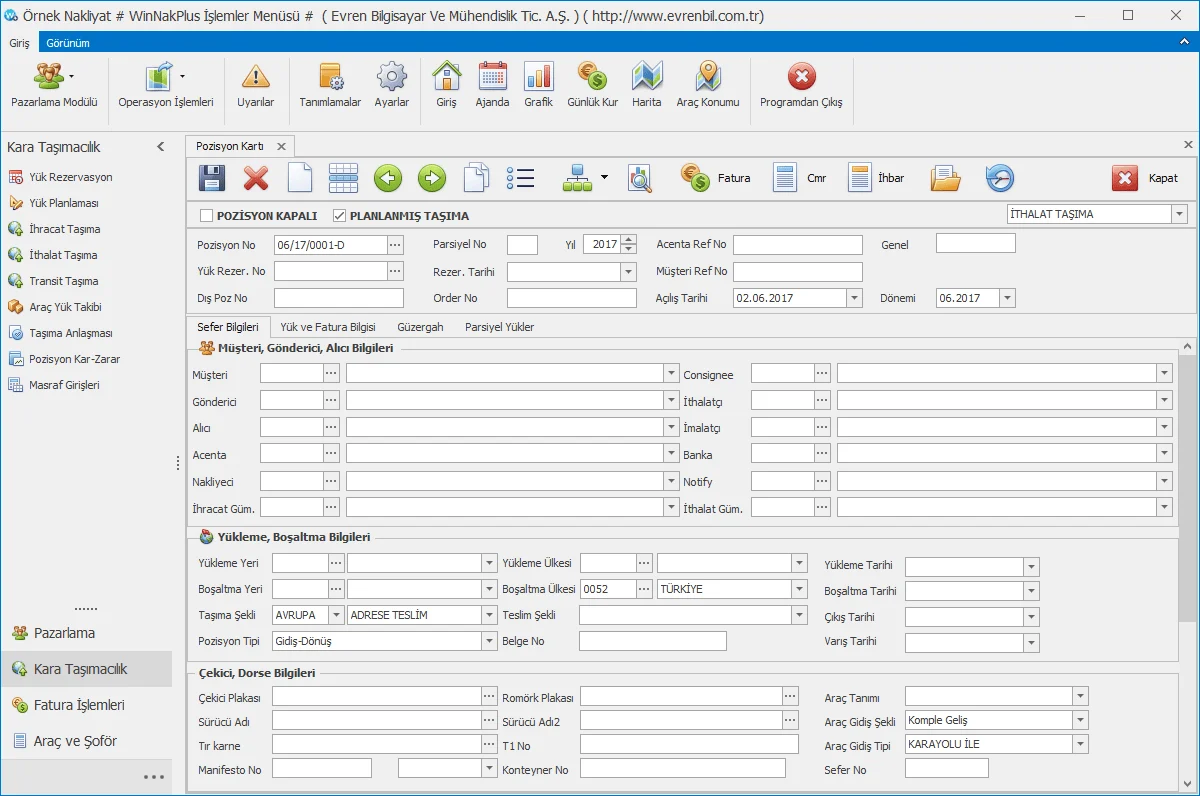
Vehicle assignment, start of loading, completion of loading and vehicle exit are examples of milestones frequently used in highway operations. These stages indicate whether the migration has actually started. Even if the installation starts at the scheduled time, its completion may be delayed. For this reason, not only the beginning of the loading, but also the completion and exit information must be tracked with separate records.
Customs and border procedures constitute an important part of the milestone structure in international transportation. Stages such as opening the export declaration, completing the customs procedures, the vehicle reaching the border gate, crossing the border or being taken into the import process can be followed. These points are especially important in evaluating waiting times and operational delays.
In maritime operations, milestones can be defined as receiving the container empty, loading it, entering the port, loading it onto the ship, departing the ship, arriving at the transfer port, discharging it and becoming ready for delivery. In air cargo, stages such as reservation, cargo acceptance, flight preparation, loading onto the plane, departure, arrival and customs procedures stand out.
The final stages are usually reaching the destination, creating a delivery plan, delivering the product to the buyer and transferring the delivery document to the system. It is not enough to simply close the operation with the arrival of the vehicle. Confirming that the delivery has been made, recording missing or damaged product information, and completing the necessary documents may also be included in the final milestone steps.
How to Track Planned and Actual Milestone Times?
The basis of milestone tracking is the comparison of planned and actual times. Planned time indicates the date and time at which the relevant phase is expected to be completed. Actual time refers to when the transaction was actually completed. The difference between these two data helps to understand whether the operation is progressing according to schedule.
Planned milestone times can be created according to the transportation schedule when starting the operation. Information such as loading date, vehicle departure time, estimated border crossing, arrival time and delivery date are predefined. When determining these dates, transportation distance, route conditions, working hours, customs times, port or terminal schedules and the customer's delivery time interval should be taken into account.
Actual time information can be recorded with user login, mobile application, vehicle tracking system, document upload, barcode scanning or data received from another system. For example, vehicle departure information may be generated by the driver performing a transaction on the mobile application, port entry by terminal registration, or delivery information by uploading the digital delivery document. Supporting manual entries with confirmatory data whenever possible increases record reliability.
The difference between planned and actual shipment time should be evaluated not only in minutes or hours, but also with its operational impact. While a two-hour delay at one stage does not change the delivery date for some transportations, it may cause the connection to be missed in a connecting operation. Therefore, the magnitude of the delay as well as its impact on subsequent milestones should be examined.
Status codes can be used for each milestone during tracking. Statuses such as planned, pending, started, completed, delayed, canceled or awaiting verification show the current status of the operation more clearly. Using only the completed and incomplete options can make it difficult to see intermediate states in the process.
When actual dates are entered into the system, subsequent plans may need to be updated automatically or in a controlled manner. If the vehicle departure is later than planned, arrival and delivery estimates should not be left with outdated information. New estimates should be created taking into account the current status of the operation, the remaining distance and the operating conditions of subsequent processes.
Regular reporting of planned and actual data is also important. It can be analyzed at which milestones there are more deviations, on which routes the delay increases, which carriers comply more with the planned times, and in which operation types the predictions are unrealistic. These results support more accurate planning for subsequent transportation.
How to Manage Delayed or Incomplete Operation Phases?
When a milestone is not completed on the planned time, the delay must first be defined correctly. Not every delay is caused by the same cause and does not require the same intervention. Failure to prepare the cargo, late arrival of the vehicle, lack of documents, customs procedures, traffic, weather conditions, technical failure or the customer not being ready for delivery are different reasons for delay. Just giving a new date without correctly determining the cause will not prevent the problem from recurring.
Tolerance period can be defined for Milestone. At some stages, a deviation of a few minutes or hours may not be critical to the operation. However, when the specified tolerance is exceeded, the system must generate a warning and inform the responsible person. This way, teams won't be unnecessarily busy with every little change, while truly risky deviations won't go unnoticed.
The responsible user or department for the delayed phase should be determined. The planning team can be informed when the vehicle assignment is not completed, the relevant operation unit in case of lack of documents, the warehouse or the supplier in case of load preparation. Unclear responsibility can lead to delays being visible to everyone but managed by no one.
The effect of the delay on subsequent stages should also be calculated. When a milestone is completed late, all dates may not be postponed at the same rate. In some cases, the delay can be compensated for by speeding up the subsequent process. In some operations, larger deviations may occur due to connecting flights, terminal closing time or customs working time. Therefore, the new plan should not be created by simply adding minutes to the existing delay.
Lack of registration at incomplete milestones should be distinguished from actual operational delay. The transaction may have been completed in the field, but no information may have been entered into the system. In this case, the operation may appear to be waiting on the screen while it is actually progressing. User reminders, automatic data transfer and mandatory registration rules can reduce such visibility problems.
Operation delay tracking becomes more meaningful when the reason for the delay is recorded with standard options. Free text explanations may be necessary, but having the same reason written differently by different users reduces reporting quality. Standard reasons such as vehicle delay, lack of documents, customer-related waiting, customs congestion or technical problems may be used.
In case of critical delays, the customer information process should also be activated. Instead of just telling the customer that the delivery will be delayed, it can be shared at what stage the deviation occurred and what the updated estimated date is. However, automatically sending unverified information to the customer within the operation may lead to misdirection. Therefore, notification rules should be determined according to the type of delay and verification status.
After completed operations, delayed milestones should be examined separately. One-time external factors should be distinguished from constantly recurring structural problems. If there are persistent delays at the same loading point, frequent border waits on a particular route, or repeated disruptions in a particular document process, operation-based intervention alone will not be sufficient. The process itself should be re-evaluated.
The Impact of Milestone Tracking on Shipment Visibility and Customer Information
Milestone tracking makes shipment visibility no longer dependent on location information alone. Even if the vehicle is moving on the map, it may not be clear from the location data whether customs procedures have been completed, whether the load has been transferred to the transfer vehicle or whether a delivery appointment has been created. Milestone structure shows the physical and managerial status of the operation together.
For operations teams, shipment visibility makes it easier to distinguish which transportation is proceeding normally and which requires intervention. Instead of communicating with all shipments one by one, critical stages that are pending or delayed can be filtered out. Thus, teams can allocate their time to risky operations rather than normal transportation.
A more clear and reliable structure is created in customer information. Instead of general statements such as "Your cargo is on the way", information that the loading has been completed, the vehicle has exited, border procedures have been completed or it has been placed on the delivery plan can be shared. This approach allows the customer to more accurately understand at what stage the operation is.
Shipment visibility can also reduce information demands on customer service. When customers do not have to repeatedly ask for status for the same operation, both the customer experience and the operations team's workload can improve. However, the milestones to be shared must be meaningful for the customer. Any internal process that is too technical or constantly changing should not be presented to the customer.
Milestone data contributes to updating delivery forecasts. If previous critical stages are completed on schedule, the reliability of the current delivery forecast increases. If a significant stage is delayed, the estimated arrival or delivery date may be recalculated. Thus, the customer is provided with information based on the actual status of the operation, rather than the outdated date given at the beginning.
This tracking structure can also be used in performance evaluation. Milestone compliance of carriers, operation teams, loading points or routes can be compared. When it is seen which stages are more frequently delayed, improvement efforts can be directed to the right point. In this respect, Milestone data is valuable not only for instant tracking but also for long-term operation management.