The Importance of Digitalization in Maritime Transportation
Although maritime transportation forms the backbone of global trade, processes carried out by traditional methods have become insufficient over time. Factors such as paperwork density, manual planning, communication gaps and operational delays both increase costs and negatively affect customer satisfaction. Therefore, digitalization has become not just a choice but a sustainable competitive advantage. Logistics software, as one of the basic tools of this transformation, reshapes the process by replacing manual operations with real-time data management and automation.
Thanks to the opportunities offered by digitalization, transportation processes become more transparent, traceable and faster. By moving paperwork to the electronic environment, time loss is prevented, and possible delays can be predicted with load tracking systems. Additionally, since operational data can be collected in central systems, planning and decision-making processes are carried out more strategically. This transformation not only saves labor, but also enables companies in the sector to gain a more competitive position in the global market.
How Does Digitalization Increase Operational Efficiency in Maritime Transportation?
Digitalization in maritime transportation makes the operational process more controlled and predictable by minimizing human error. In traditional systems, manual operations such as ship tracking, creating a loading plan or issuing a bill of lading; Since it is automated on digital platforms, time is saved and errors in the process are significantly reduced. This automation also makes it possible to complete tasks faster and use resources more efficiently.
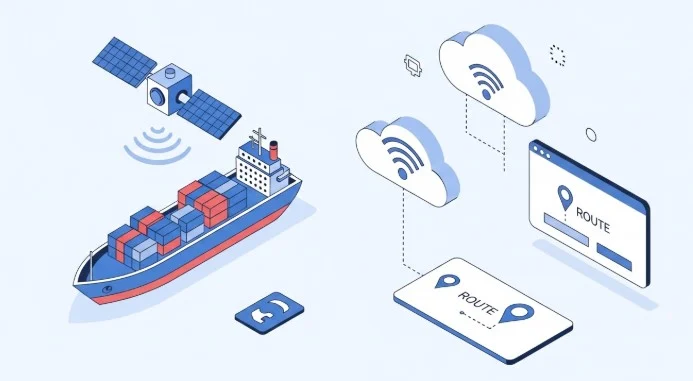
In addition, thanks to digital systems, real-time data flow is provided and operations teams can instantly access information such as route updates, container movements or document approvals. This is especially critical for complex logistics structures because any disruption can directly affect other links of the chain. Digitalization greatly increases the continuity and efficiency of transportation operations by preventing such possible blockages.
What Advantages Do Digital Systems Provide in Container and Ship Planning?
The biggest contribution of digital systems in container and ship planning is that they provide the most appropriate loading and unloading scenarios by processing complex data quickly and accurately. Especially in large volume shipments, manual planning is both time consuming and may create inefficiency in capacity utilization. Digital platforms, on the other hand, provide a balanced layout within the ship by evaluating the weight, volume, destination port and unloading priority of each container. In this way, transportation safety increases and port operations are accelerated.
In addition, digital systems can analyze ship traffic in ports and determine estimated arrival and berthing times in advance. Thanks to these predictions, port resources are planned more effectively and unnecessary waiting is prevented. Digitalization in ship planning does not only offer operational convenience; It also contributes to the uninterrupted operation of the global supply chain. This means a significant advantage for carrier companies in terms of both time and cost.
How Does Using Electronic Bill of Lading (e-B/L) Facilitate Processes?
Electronic bill of lading (e-B/L) is the conversion of traditional paper-based documents into digital format and provides a serious transformation in maritime transportation. Thanks to this system, it is possible to deliver bills of lading to the recipient within seconds, without the need for physical sending. This eliminates risks such as postal delays, document losses or signature mismatches. At the same time, since each transaction is recorded digitally, audit processes become transparent and retrospective monitoring can be done easily when needed.
The use of e-B/L also reduces communication traffic in the process by providing secure and fast data sharing between the parties. Especially in international transportation, significant improvements are achieved in delivery times as it eliminates time losses during document circulation. Additionally, document integrity is guaranteed in systems supported by technologies such as blockchain. This ensures a faster, reliable and cost-free trade flow between the carrier, sender and receiver.