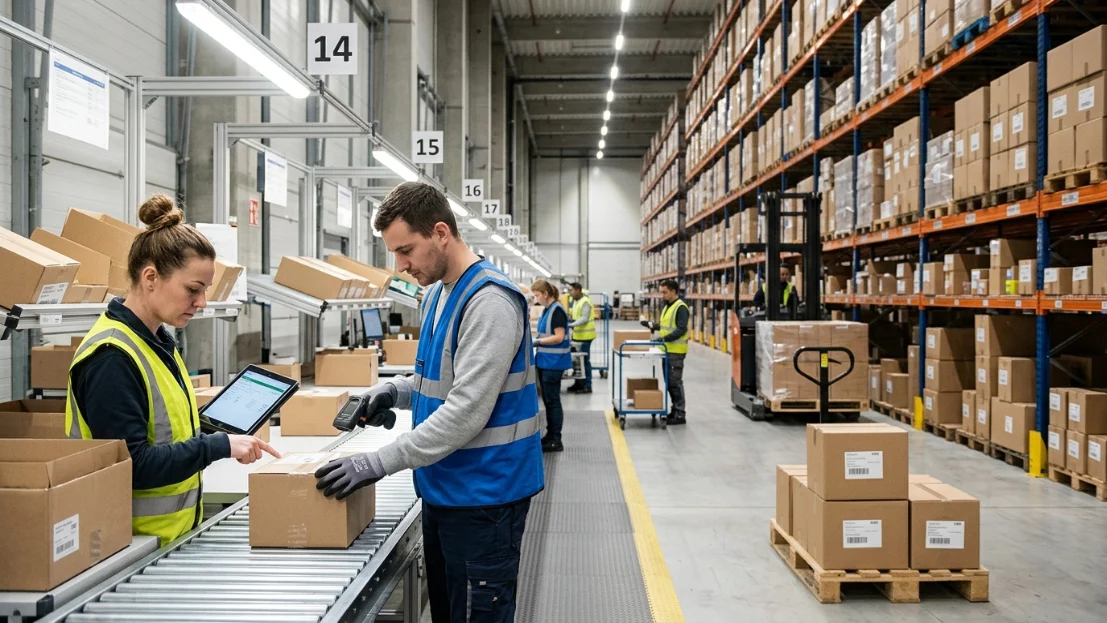
How Should the Order Fulfillment Process Be in Logistics?
The order fulfillment process in logistics is the chain of operations that extends from receiving the customer order into the system to preparing the products, checking them and making them ready for shipment. This process does not only mean removing products from the warehouse. Verifying order information, checking stock status, preparing products correctly and making final checks before shipment are also essential parts of the order fulfillment process. Regular operation of the process directly affects both the speed of operation and the accuracy of the order reaching the customer.
The question of what is order fulfillment is important in understanding the whole of logistics operations. In the flow that begins with the order entering the system, each step forms the basis of the next. If the order information is entered incorrectly, the preparation phase may proceed incorrectly. Even if the product is prepared correctly, if the control phase is missing, the wrong quantity or the wrong product may be shipped. Therefore, the order fulfillment process should be evaluated not only on speed but also on accuracy and process control.
When order management is carried out in logistics, the type of order, product quantity, delivery date, customer priority and special shipping conditions, if any, are taken into account. An order that needs to be delivered on the same day and a future order may not be processed in the same order. Similarly, the preparation of orders containing high volumes or special products may require more time and control than standard orders. Therefore, the order fulfillment process should be a controlled structure managed according to operational needs rather than a uniform workflow.
Managing the order fulfillment process throughLogistics programs can make it visible at what stage the order is. Situations such as when the order is received, started to be prepared, checked and ready for shipment can be monitored in a single operation flow. Thus, information loss between teams is reduced and pending transactions can be identified more easily. However, for the system to work efficiently, the order fulfillment steps must be clearly defined within the business.

What Stages Does the Order Fulfillment Process Consist of?
The first stage of the order fulfillment process is receiving and verifying the order. The order information submitted by the customer is recorded in the system and the product, quantity, delivery address, delivery date and special notes, if any, are checked. If a deficiency or error in the order information is not noticed at this stage, it can be carried forward to the next operational steps. Therefore, creating a complete order record forms the basis of the process.
The second stage is to check stock suitability. It is evaluated whether the products in the order are in existing stock and whether the requested quantity can be met. If the stock is insufficient, the entire order may not be prepared or partial fulfillment may occur. In this case, a new plan may need to be created between the customer, sales and operations teams.
The order preparation process continues with finding the products in the warehouse and preparing them for shipment. Products are collected from the relevant shelves or stock areas, compared with the order quantity and, if necessary, taken to the packaging process. Preparation time may be extended if the products are located in different locations or if the order contains many product types.
After preparation comes the control phase. It is checked whether the collected products are compatible with the order, whether the quantities are prepared correctly and whether the product codes, if any, match. This stage is of critical importance, especially in warehouses with similar products. If the wrong product is shipped, it may negatively affect both operational costs and customer satisfaction.
The next stage is packaging and preparation for shipment. Products must be packaged, labeled and matched with the necessary documents in accordance with the transportation conditions. Standard packaging methods may not be sufficient for products that are fragile, sensitive or have special storage conditions. Therefore, appropriate preparation should be made according to product specifications.
Once the order is ready for shipment, the vehicle and loading plan comes into play. Prepared orders are matched with the correct vehicle, route and delivery plan. Orders destined for the same region can be brought together or a loading plan can be created according to delivery order. Thus, the order fulfillment process is not limited to the preparation in the warehouse, but is completed with the shipment organization.
How to Manage the Order Preparation and Control Process?
In order to manage the order preparation process properly, first of all, correct task distribution must be made. It should be determined which order will be prepared by which employee or team, in what order it will be processed and within what time it must be completed. Especially during busy periods, unplanned distribution of orders to employees may cause some teams to be overloaded.
Prioritization of orders also affects the preparation process. Orders that are close to delivery, are critical for the customer, or will be sent by the same vehicle may be processed earlier. However, constantly bringing new orders forward may cause delays in previously planned work. Therefore, priority rules must be based on certain criteria.
It is important to compare the order list with the physical products during product picking. Fields such as product code, quantity, batch information or serial number can be checked. Using a barcode or handheld terminal can help reduce manual selection errors. However, regardless of the method used, the records must be compatible with current stock information.
Order accuracy must also be maintained during the packaging phase. Preparing the right products is not enough; It is also important that the products are packaged and labeled under the correct order. If many orders are being prepared at the same time, physical separation or digital control methods can be used to prevent products from mixing.
The order control process may, whenever possible, include a verification step that is independent of the preparation process. Having the same person perform both collection and final control may cause some errors to be overlooked. It may be safer to apply a second check, especially for high-value, sensitive or critical orders.
During the check, not only the product and quantity but also the delivery information should be reviewed. Incorrect address, missing customer information or incorrect delivery date may cause operational problems even if the product is prepared correctly. Therefore, pre-shipment verification should not be limited to in-warehouse product control.
Measuring preparation time also helps improve the process. If certain product groups consistently experience long preparation times, shelf layout, picking method or task distribution may be re-evaluated. Thus, order fulfillment performance can be examined not only through the results but also through bottlenecks in the process.

How to Ensure Order Accuracy Before Shipment
Order accuracy means preparing the products requested by the customer for shipment in the correct quantity and with correct delivery information. The final check before shipment ensures that errors that were not noticed during the preparation phase are detected before they reach the customer. Therefore, order accuracy is an important part of not only warehouse performance but also service quality.
The first control point is the matching of the products prepared with the order. Product codes, quantities, variants and, if any, serial or lot information should be compared. In buildings where products with similar names or packaging are available, relying only on visual control may not be sufficient.
The number of packages should also be verified during pre-shipment inspection. Loading three boxes into the vehicle when there should be four boxes in the order may result in incomplete delivery. For this reason, it is important that the packages are not only prepared but also counted or scanned during shipment.
The accuracy of the delivery address and customer information should also be checked. If the same customer has more than one branch or delivery point, the risk of shipment to the wrong location may increase. Address, contact information and delivery time interval, if any, can be reviewed before the vehicle leaves.
Document control is also part of order accuracy. The delivery note, delivery note or other documents required for the operation must be matched with the correct order. A shipment with the wrong document may cause problems in the delivery process, even if the products are correct.
A final verification can also be made during installation. The prepared order must be loaded into the correct vehicle and the correct route plan. If more than one vehicle is located in the same loading bay, there may be a risk of incorrect vehicle matching. Therefore, it is beneficial to verify vehicle, shipment and order information together during loading.
Regular measurement of order accuracy is also important. Problems such as wrong product, missing quantity, excess product, wrong address or document error can be tracked in separate categories. When it is seen which error type is repeated more frequently, improvement efforts can be directed to the right point.
What are the factors affecting order fulfillment performance?
One of the main factors affecting order fulfillment performance is stock accuracy. If the amount of stock in the system does not match the physical stock, the product may not be available during order preparation. This may cause employees to search for products, the order to be held, or the delivery date given to the customer to change.
Warehouse layout also directly affects performance. Frequently used products are located in areas far from each other or product addresses are not regular, which may extend the collection time. As the movement distance within the warehouse increases, more time and labor is required to prepare the same order volume.
Personnel capacity and experience is another important factor. If the balance between order density and number of employees is not established, preparation time may take longer. Product selection and registration errors may increase in new or inadequately trained employees. For this reason, the workforce plan should be made not only based on the number of personnel but also on the competency level.
Order structure can change performance. The preparation times for orders consisting of a large quantity of a single product and orders containing many different products are not the same. Orders that require special packaging, serial number checking or product-based documentation may also create increased processing time.
Technological infrastructure also affects order fulfillment performance. Lack of up-to-date stock information, data delay between different systems or excessive manual data entry may extend the operation time. On the other hand, harmonious progress of order, stock and shipment information makes it easier for teams to work on the same up-to-date data.
Order fulfillment performance should not be evaluated solely on speed. Orders prepared very quickly but containing frequent errors create additional costs and customer dissatisfaction in the long run. Therefore, indicators such as preparation time, order accuracy, missing product rate and readiness for on-time shipment should be considered together.
Opportunities for process improvement may arise when recurring delays within the operation are analyzed. If orders are constantly waiting at a certain stage, some products take longer to prepare, or too many errors are found during the final check, this may indicate that the relevant process needs to be rearranged.
Regular measurement and improvement of the order fulfillment process ensures a more controlled progress of the process from the moment the order is received to the moment it becomes ready for shipment. Thanks to the support of stock, personnel, warehouse, control and shipping steps, both preparation speed and order accuracy can be made more sustainable.