How is Shipment Prioritization Done?
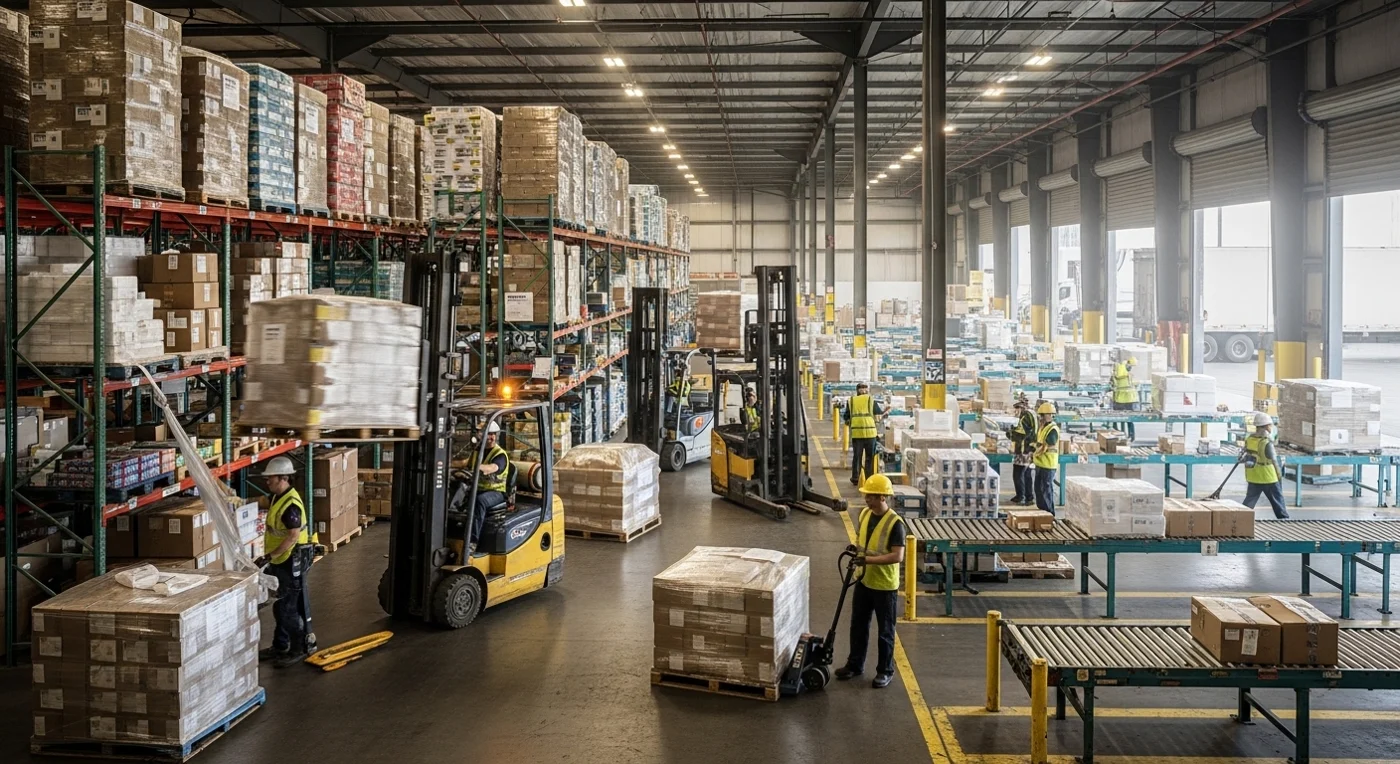
Shipping prioritization is a planning approach that determines which load will be processed first among the large number of orders, products or delivery requests that need to be transported at the same time. The goal is not just to put things in order. The main purpose is to make a balanced decision between time, cost, customer expectation, product structure and operational capacity. Especially in companies with high daily shipment volumes, treating all shipments as of equal importance creates a bottleneck in a short time. There is accumulation at the warehouse exit, vehicle schedule is disrupted, urgent orders are lost in the general density and delivery performance decreases. That's why shipment prioritization is one of the key decision areas in distribution and logistics management.
When proper prioritization is not done, the problem is not just delay. An incorrectly ordered shipment can also lead to higher cost vehicle usage, customer complaints, production line backlogs, or unnecessary congestion in the field operation. Conversely, bringing forward the right shipment at the right time allows completing more work with the same resource in a controlled manner. That's why it's not just about speed, it's about decision quality.
Shipment prioritization is especially important for businesses that serve a large number of customers, distribute to different regions, work with different delivery times and have a high product variety. On the one hand, there may be orders that need to be delivered on the same day, and on the other hand, there may be critical materials that feed the production line or shipments that need to arrive within a certain time. These differences must be managed correctly within the same plan. Otherwise, even if the operation seems intense, it will not work efficiently.
The most critical point here is that the priority decision should be made according to certain rules, not personal guesses. If it is not clear which order is brought forward and why, confusion occurs among teams. If sales proceed with the logic of one priority, the warehouse another, the shipping team another, the operation will fall apart. Especially companies using logistics software can define their shipment priorities more clearly with criteria such as delivery date, customer type, product quality, route suitability and capacity status. This makes daily decisions more consistent.
In short, shipment prioritization is not a sequence to reduce density, but the planning backbone that ensures that the operation moves the most critical loads at the right time. When it is established strongly, delivery performance increases, resource use is balanced, and the feeling of trust on the customer side is strengthened.
Criteria Determining Shipment Priority
Delivery time is the primary criterion that determines shipment priority. Orders that need to be delivered on a certain day or within a certain time period naturally have a higher priority. Because any delay in such shipments directly affects not only the delivery time but also customer satisfaction and service quality. Same-day delivery, appointment delivery or production line-dependent shipments should be carefully evaluated in this respect.
The second important criterion is customer priority. Not every customer may have the same commercial weight. In certain cases, corporate customers who work constantly, buyers with a contractual delivery structure, dealers who place high-volume orders or businesses who work with critical stock are considered priority. This approach is used for business risk management, not for granting privileges. Keeping the wrong customer waiting at the wrong time can cause significant losses in the long term, even if they seem small in the short term.
Product quality is also one of the main factors that determine priority. Items that are fragile, perishable, temperature sensitive, high value, or to be used in production should not be handled in the same way. The risk decreases as the waiting period of some products in the warehouse becomes shorter. In some cases, the wrong transport order may cause quality problems. Therefore, the priority decision is not only related to the order date but also to the structure of the product.
Another criterion is delivery area and route suitability. Sometimes two orders that are not very urgent can be brought forward together due to route efficiency. The reason for this is that a more balanced ascent can be made with the same vehicle. Likewise, an order that appears to be low priority may go out early when the time is right because it fits perfectly into the planned vehicle line. This approach requires evaluating priority not only in terms of urgency but also in terms of operational compliance.
Stock and readiness should also be taken into account. Prioritizing a shipment that is not ready will not speed up the operation. On the contrary, it creates pressure within the warehouse. Therefore, prioritization must also take into account the actual exit status of the order. Shipments that are ready, checked and suitable for loading can be planned more accurately. Thus, the priority on paper and the applicability in the field come closer to each other.
Planning Process According to Shipment Priority
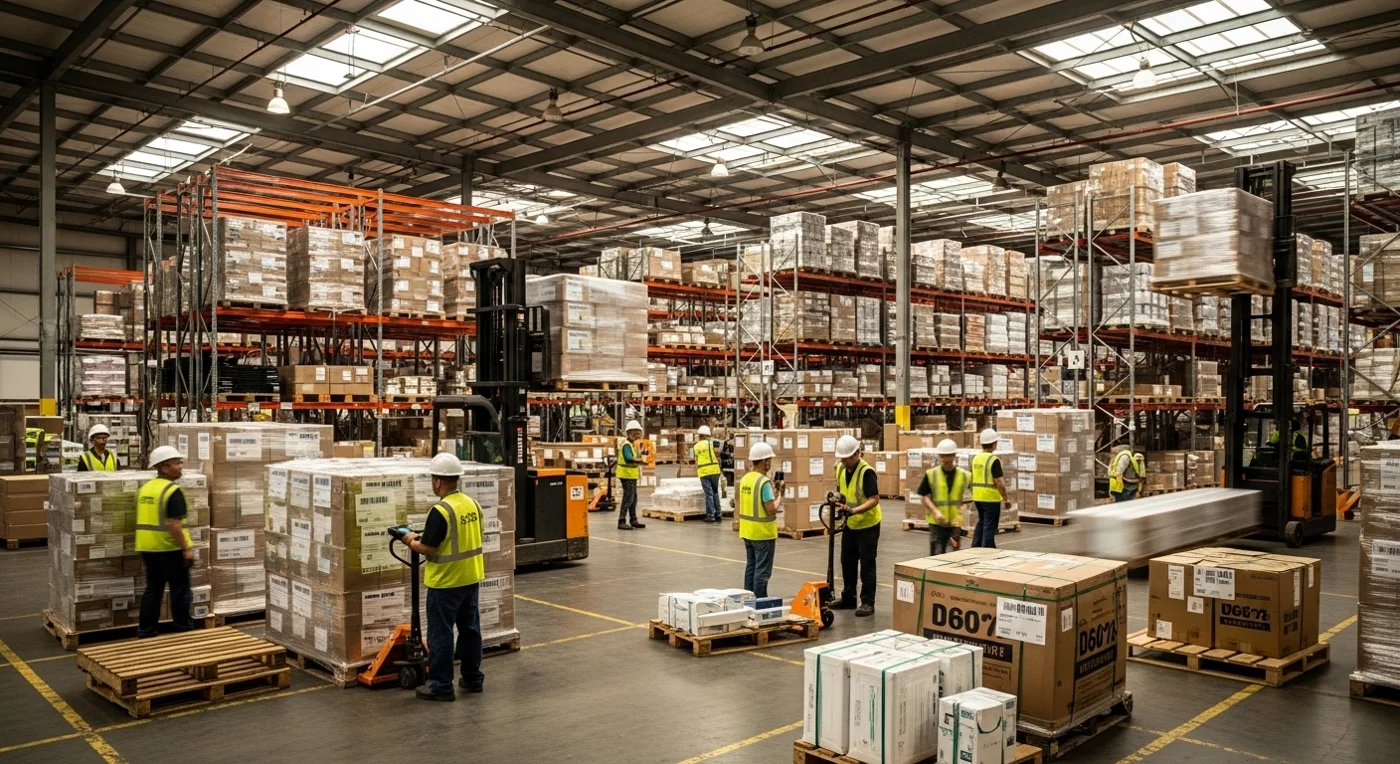
The planning process according to shipment priority begins with the classification of orders. Here, the delivery date, customer type, product quality, shipping region and preparation status of each order are evaluated. Moving directly to the vehicle plan without this evaluation weakens the prioritization. Because all the loads that will be released on the same day may be similar in appearance, but they may not have the same importance in terms of operation.
After classification, orders are divided into priority groups. Groups such as very critical, priority, standard and flexible shipment can be created. This grouping is not just a theoretical ranking. It also influences warehouse preparation, vehicle assignment and loading order. It is not enough for critical shipments to appear as priority in the system. It must first be prepared in the warehouse, assigned to the appropriate vehicle and placed in the right place within the route.
The next stage of the planning process is capacity control. After priority shipments are determined, the number of available vehicles, vehicle capacity, driver status and delivery areas are evaluated together. The most common mistake made here is to prioritize priority orders and completely ignore other shipments. However, good planning must strike the balance of securing high priority shipments while moving standard orders within a reasonable time. Otherwise, improvement in one area will create accumulation in another area.
Loading order is also an important part of the planning process. It is not enough for priority shipping to just be written at the top of the vehicle list. It needs to be placed in such a way that it can actually be delivered on site. Although a shipment that is difficult to access in the vehicle may appear to be a priority on paper, it may be delayed in practice. Therefore, according to shipment priority, the planning process must consider warehouse and field flow together.
At this stage, system support makes a big difference. Filtering orders by priority group, matching vehicle capacity accordingly, and setting up the route layout accordingly becomes difficult after a point with manual methods. Logistics software makes priority criteria visible, showing more clearly which shipment is prioritized and why, and how this is reflected in the daily plan. Thus, planning becomes more consistent, faster and more traceable.
Operational Impacts of Shipping Priority
Correctly established shipment priority directly affects the rhythm of the operation. When priority shipments are sorted at the right time, in-warehouse preparation runs more smoothly. When teams know which load is being prioritized and why, unnecessary debate is reduced and decisions are faster. This relieves operational pressure, especially during busy periods. As lack of planning decreases, warehouse checkout time becomes more controlled.
There is also a significant difference in vehicle use. The vehicle plan works more efficiently when correctly prioritized shipments are directed to the correct lines with appropriate capacity. The need to search for last-minute vehicles for critical orders is reduced, and standard shipments can be placed in other spaces more systematically. Thus, urgent loads are protected and there is no imbalance in capacity usage.
Delivery performance is also directly affected by this structure. When the risk of priority shipments being delayed decreases, customer confidence increases. Especially in deliveries with high time sensitivity, correct ordering reduces the complaint rate and increases the service level. In addition, the field team works more clearly. Because it becomes clear which point was visited first and why. When uncertainty decreases, route execution becomes more orderly.
Another dimension of operational impact is team coordination. When sales, warehouse, planning and shipping units meet with the same priority logic, the information flow progresses more strongly. It becomes clear which order should not wait, which one stands out due to route advantage, and which one is handled specially due to customer commitment. When this common language is not established, each team acts according to its own perspective and the operation becomes weak.
Correct prioritization also makes crisis management easier. In case of capacity problems, vehicle malfunctions or unexpected congestion during the day, intervention will be faster if it is clear in advance which shipments need to be protected. This way the operation can be rebalanced without completely falling apart. This provides a great advantage, especially in buildings with high daily shipment volume.

Mistakes Made in Shipment Priority
The most common mistake made in shipping priority is to consider all urgent orders at the same level. Each customer may want to see their order prioritized, but the operation cannot handle it at the same time. The priority system loses its meaning when the order that is truly critical and the order that is only requested quickly cannot be separated. In the end, everyone becomes a priority and no one actually remains a priority.
Another mistake is to prioritize based solely on sales pressure. It is natural for the sales team to prioritize customer expectations, but decisions taken without considering warehouse preparation, vehicle capacity and route status will cause problems in the field. If priority is determined solely by commercial pressure, the reality of the operation is ignored. This creates unplanned vehicle departure, unbalanced loading and delivery delay.
Not taking product quality into consideration is also an important mistake. Quality loss may occur when products that are perishable, sensitive or require special handling are ordered using standard order logic. Likewise, releasing materials connected to the production line into the general order density can also cause serious disruptions. Therefore, product features should be an integral part of the priority decision.
Prioritizing without seeing the applicability in the field is also a common problem. A shipment brought forward on paper may remain inaccessible on the vehicle due to the wrong loading order, or may not be delivered on time because it is on an inappropriate route. Therefore, the priority decision loses its effect when it is not supported by planning and loading order.
The last big mistake is not to follow up systematically. If it is not monitored which priority decisions work, which ones create new problems, which customer groups continue to be delayed, or which vehicle schedule creates an imbalance, the same mistakes will repeat. Prioritization should not be a one-time decision, but a structure that needs to be constantly reviewed. Priority logic that is not based on data turns into personal interpretation over time.
When shipment prioritization is established correctly, the operation runs more balanced, delivery risk is reduced and critical loads move in a more controlled manner. When installed incorrectly, the vehicle plan is disrupted, warehouse pressure increases and there is a loss of trust on the customer side. Therefore, priority decisions should be based on clear criteria, carried out in accordance with planning and reviewed regularly. When such a structure is established, shipment management becomes not only faster but also more consistent.
Evaluating multiple orders within the same transportation plan provides advantages in terms of both cost and time. Used in conjunction with shipment prioritization, this method significantly increases operational efficiency. what is shipment consolidation icontent, in which we discuss this issue in more detail, will be useful in understanding the different dimensions of the process.