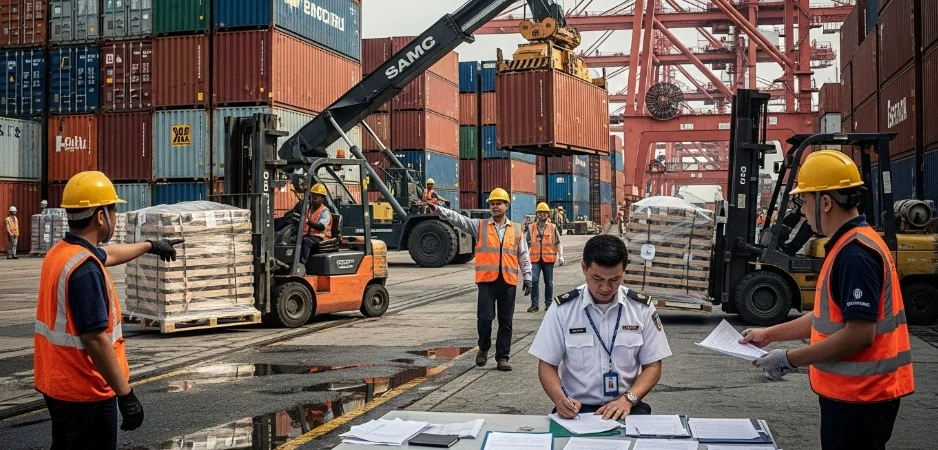
Customs clearance is the process of checking the compliance of a product with the rules determined by the relevant government institutions when entering or exiting from one country to another and completing the necessary taxes, documents and declarations. This process, one of the basic building blocks of international trade, ensures that both import and export transactions are carried out legally. Thanks to customs clearance, countries protect the safety of products, compliance with standards, tax collection and economic order. Therefore, in order for a good to enter free circulation, transit or be sent abroad, customs procedures must be completed completely and correctly.
Although customs clearance may seem like a mere formality, it is actually a very technical and multi-stage process. Description of the goods, correct determination of the tariff code (GTIP), correct declaration of the country of origin information, selection of the shipment type, calculation of taxes and preparation of appropriate documents are of great importance throughout the process. Misrepresentation, missing documentation or incorrect tariff selection may lead to cost increases and delays. For this reason, businesses aim to both speed up the process and minimize errors by working with professional customs consultants.
How Does the Customs Clearance Process Work?
The customs clearance process begins when the goods enter the country and is completed when the goods are put into free circulation. In the first stage, when the product reaches the customs area, it is recorded by the customs administration and registered systematically. The goods are then directed to one of the inspection channels such as red, yellow, blue or green line within the scope of risk analysis. This guidance is determined according to criteria such as the type of product, the country of origin, past transaction records and compliance with relevant regulations. If the product falls within the red line, a physical inspection is performed; the yellow line requires document control; the green line provides direct transit; The blue line is a facilitated channel for authorized obliged parties.
The second stage in the process is the preparation of the declaration and uploading the necessary documents to the system. The customs consultant or importer company fills out the customs declaration by correctly determining the GTIP code of the goods. The customs administration makes tax calculations in the light of the declared information. After the inspection and controls are completed, the accrued taxes are paid and the goods are released. Since each of these stages is interconnected, an error at one point can prolong the entire process. Therefore, correct document preparation and professional follow-up are critical for the smooth functioning of the customs clearance process.
Which Documents Are Required for Customs Clearance?
Documents required for customs clearance may vary depending on the type of product transported, country, mode of trade and legal regulations. However, basically, commercial invoice, transport document (Bill of Lading, CMR, AWB), packing list, certificate of origin and customs declaration are the most frequently used documents. While the commercial invoice includes the unit price, total value, seller and buyer information of the product; The packing list shows how the products are placed by box or case. The certificate of origin proves in which country the product was produced and is of great importance in terms of taxation. Some products may also require additional inspection documents such as a health report, phytosanitary certificate, CE conformity certificate or TAREKS.
In addition, different permit documents may be requested according to import and export procedures. For example, permissions from the Ministry of Environment are required for chemical substances, control documents from the Ministry of Agriculture for food products, and UBB registrations are required for medical devices. Additionally, certificates regarding quality controls in textile, machinery and electronic products may be requested. Preparing each document completely and accurately will both speed up the inspection process and prevent costly delays. Goods may wait for days due to missing documentation, misrepresentation or faulty content; This can especially seriously increase logistics costs.
How Are Customs Clearance Fees Determined?
Customs clearance fees are basically determined according to the type of goods, HS Code, country of origin, product value and relevant legislation. First, the customs value of the product is calculated; This value usually consists of the invoice value of the product, the sum of expenses such as freight (transportation cost) and insurance. Then, customs duties, SCT, VAT, additional customs duty or other financial obligations are calculated according to the tariff position of the product. The rate of customs duties may vary from 0% to 30%; For some products, additional taxes apply. Therefore, choosing the correct GTIP code is the most critical point in cost calculations.
Not only taxes but also operational expenses affect customs clearance costs. Storage (warehouse) fees, warehousing expenses, port-airport service fees, customs consultancy fees and control/audit costs can significantly increase the total cost. Additionally, situations such as the product falling into the red line, requiring physical inspection, or requiring additional documentation may bring extra burden in terms of both time and cost. For this reason, many businesses plan the process by calculating the costs before the transaction and prefer to get professional support to avoid surprise expenses.