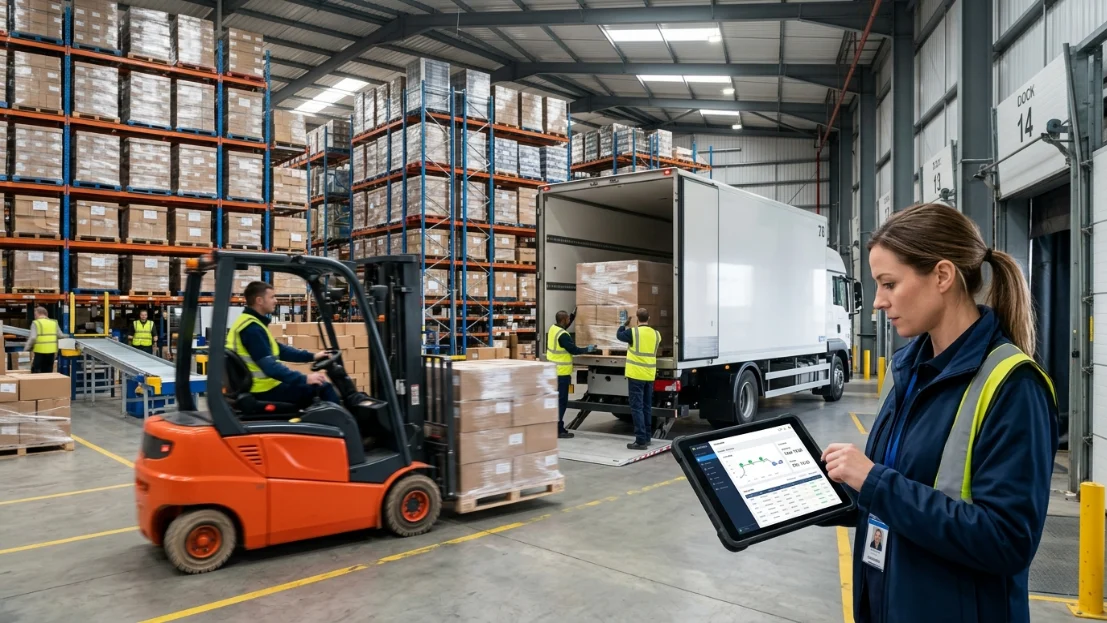
What Does Lead Time Mean in Logistics?
In logistics, lead time refers to the total time from the beginning to the completion of an order or shipment. This concept is often confused with delivery time alone, but in reality it has a much broader meaning. All interconnected steps such as entering the order into the system, checking it, preparing the product, packaging, loading, shipping, delivering and closing the process are included in this period. For this reason, lead time is not only a measure of time that tells how many days it takes for the product to arrive, but also one of the basic indicators that shows how orderly and predictable the operation is.
A business may think its deliveries are fast, but if it experiences delays in order processing or preparation, overall performance will still be poor. Therefore, lead time allows evaluating not only the movement on the road, but the entire flow before and after it. This concept is of great importance in order to see which step causes time loss, to understand the reason for the delay on the customer's side, and to plan the operation more accurately. Especially in sectors where delivery times have become a competitive advantage, lead time management becomes decisive not only operationally but also commercially.
Lead time is also one of the basic tools for managing customer expectations. What is important for the customer is not only the shipping of the product, but also when it will arrive. Therefore, how consistently the company fulfills its promise directly affects the sense of trust. The time period may sometimes be short, but if it is irregular, if similar orders are completed at different times, the service quality appears poor. In this respect, lead time should be evaluated not only as a speed indicator but also as a consistency indicator.
For businesses that want to better monitor this concept, logistics software provides important support. Because, thanks to these structures, it can be seen more clearly in which steps the total time from order to delivery is extended, which operations create repeated delays, and in which regions more deviations occur. Thus, the business can manage not only the result but also the process leading to the result in a more controlled manner.
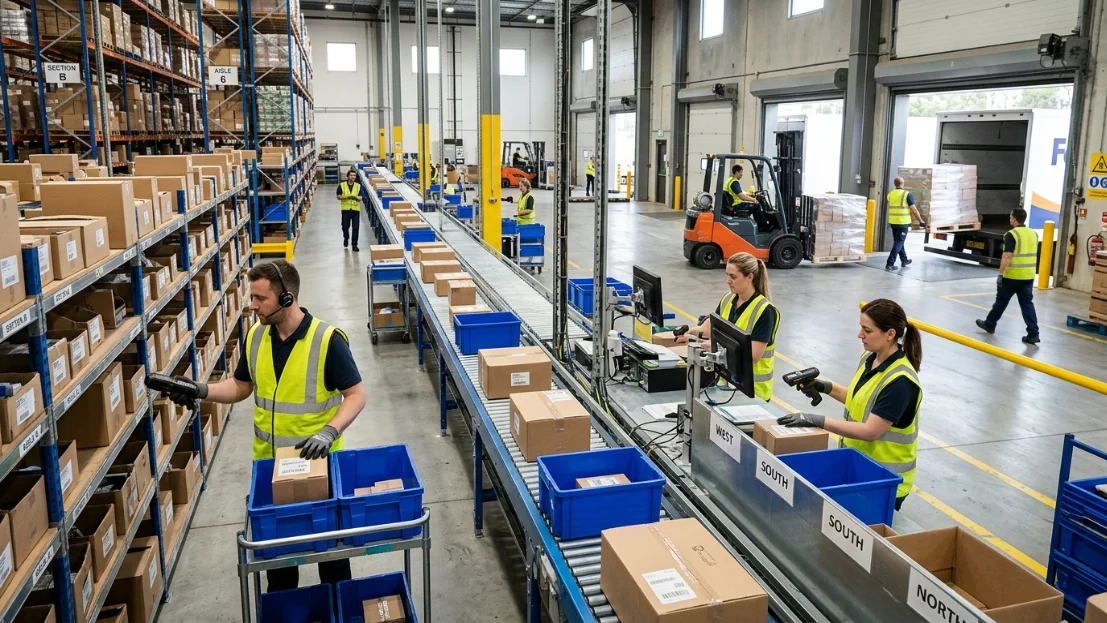
Equivalent of the Concept of Lead Time in the Logistics Process
The concept of lead time in the logistics process is the total operation time between the start of a job and the time of completion. Although this definition seems simple at first glance, it is quite comprehensive in logistics. Because for a shipment to be truly completed, it is not enough for the vehicle to be on the road. The order must be taken into the system, the product must be prepared, it must be made suitable for shipment, it must be connected to the transportation plan, it must be delivered and the process record must be closed. Therefore, lead time is not just the transit time, but the sum of the entire end-to-end flow.
The real value of this concept is that it combines seemingly fragmented logistics steps on a single timeline. The order may be received quickly, but if the warehouse preparation is slow, the total time will be longer. The shipment may have been fast, but if the delivery closing is delayed, the same result will occur. That's why lead time measures the harmony between processes, not a single stage. It makes it easier to understand in which areas the operation is disrupted and which points slow down the entire flow.
In logistics processes, different teams manage different steps of the same shipment. The sales unit receives the order, prepares the warehouse, the operations plan the shipment, and the field team completes the delivery. If time coherence between these teams is poor, the total time increases. A small delay in one department creates a knock-on effect in other departments. Therefore, the concept of lead time gives an important clue not only about delivery performance but also about the quality of internal coordination.
Lead time also helps compare different operating models. Single warehouse structure and multi-location structure, direct distribution and indirect distribution, domestic shipment and international transportation produce different time structures. To understand these differences, the entire process must be taken into account, not just the time on the road. In this respect, lead time is not only a measuring concept in logistics, but also an evaluation area that supports strategic decisions.
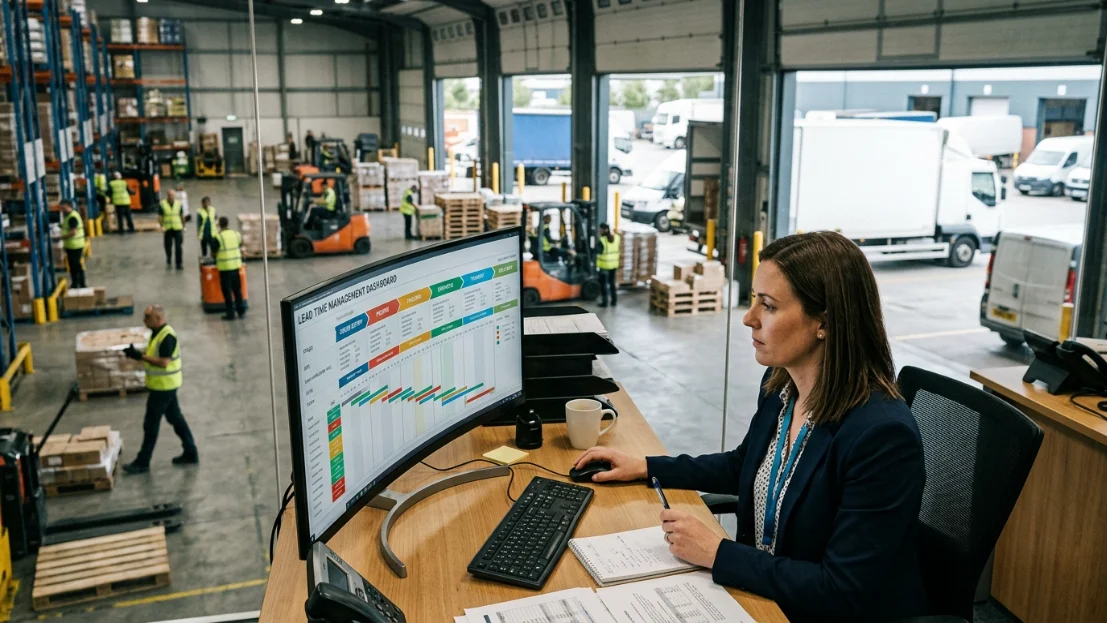
Stages Constituting Lead Time
The first stage that constitutes the lead time period is receiving the order and making it ready for processing. The process begins as soon as the order is entered into the system, but before the actual operation can begin, the information must be checked, matched with the stock and, if necessary, approval processes must be completed. This area often seems short, but small delays here can affect the total time more than noticed. If the order is waiting in the system, the process starts to lengthen before the product even moves.
The second stage is the preparation process. Finding the product in the warehouse, collecting it, sorting it, packaging it and making it ready for shipment is included in this section. If stock accuracy is low, the product appears in a different location, or there is congestion in the packaging area, this stage is prolonged. In many businesses, delays are attributed more to the transportation side, but in reality the biggest loss often occurs within the warehouse. Therefore, the preparation process is one of the most critical parts of lead time.
The third stage is the loading and shipment organization. Directing the prepared product to the correct vehicle, creating the loading order, clarifying the route or transportation plan and starting the exit take place in this section. Vehicle waiting, missing document checks, incorrect loading order or imbalances in capacity planning may prolong this phase. In other words, it is not only the transportation distance that affects the total time, but also the shipping order before departure.
The fourth stage is the physical transportation process. This part, where the product moves from one point to another, is the phase that users find most visible. Different transportation types, such as urban distribution, regional shipment, international road, sea or air cargo, affect this period differently. Traffic, border crossings, port density, terminal operations and transfer processes may be decisive here. However, this is again only a fraction of the total time.
The last stage is the delivery and closing of the process. Delivering the product to the correct recipient, processing the delivery information into the system, completing the delivery confirmation if necessary, and closing the operation record are included in this section. Although many businesses think that the job is done when the transportation is completed, from an operational perspective, the process is completed with the correct delivery. Therefore, lead time refers to the full operation time from start to closure.
Operational Factors Affecting Lead Time
One of the most important factors affecting lead time is order density. As the number of orders processed during the day increases, the pressure on the warehouse, operations and shipping teams increases. If the capacity is not planned accordingly, it will take longer for the order to be received into the system, prepared, loaded and exited. Especially seasonal transitions, campaign periods or sudden increases in demand have a significant impact on the total duration.
The second important factor is warehouse organization. If the product layout is irregular, the picking flow is poor or the stock is not up to date, the lead time will be longer. A few minutes of delay in the warehouse can cause serious total loss in orders accumulated throughout the day. Therefore, warehouse performance is one of the main areas that directly affects lead time.
Transportation model and route conditions are also an important factor. While traffic, address density and receiving behavior come to the fore in urban distribution, customs, port, transit and transfer processes are decisive in international transportation. The same order structure may create different total times for different transportation models. Therefore, when evaluating lead time, not only the internal operation but also the structure of the transportation itself should be taken into account.
The quality of the information flow also directly affects this process. Incomplete order data, incorrect delivery information, late operation notes or different teams using different data increases the total time. Even if physical movement does not start in the process, waiting may occur due to lack of information. Therefore, the quality of operational data is as important as the quality of transportation.
Human resources and inter-team coordination also determine the total time. If the distribution of tasks is not clear, approval processes are individual, or a standard flow is not established, similar orders may be completed at different times. This causes lead time to become inconsistent. In order to improve the duration, it is necessary to strengthen not only the system but also the operating discipline.
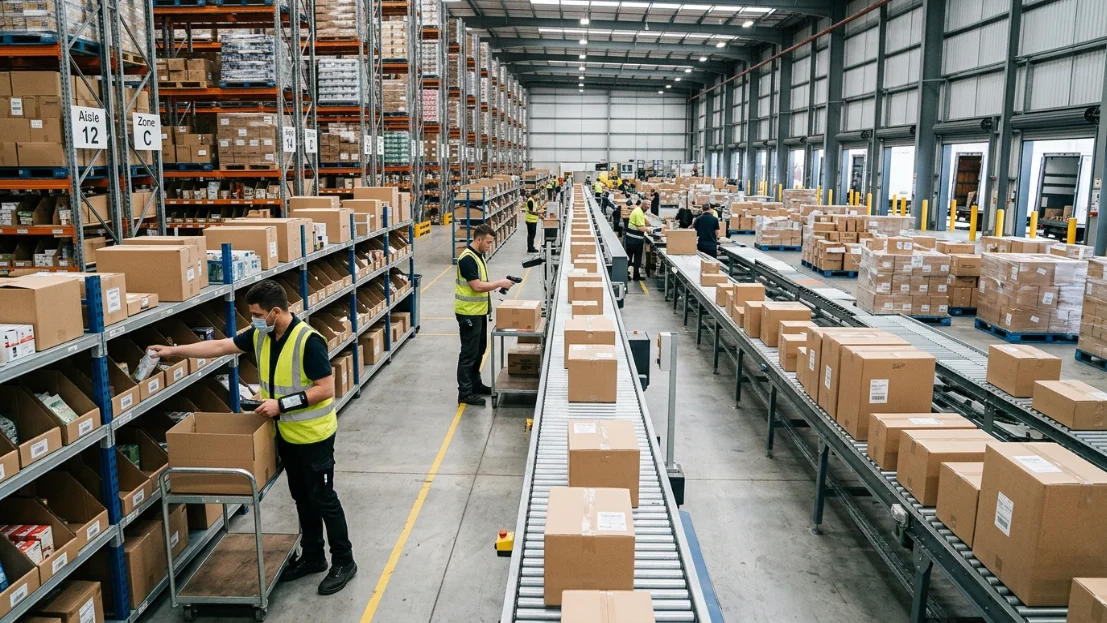
Points to Consider to Improve Lead Time
The first thing to do to improve lead time is to monitor the total time by dividing it into parts. Each of the order processing, warehouse preparation, loading, transportation and delivery stages should be evaluated separately. Seeing the total time as just a single number may not indicate where the problem is occurring. However, when it becomes clear which step creates the most waiting, improvement efforts become much more effective.
Secondly, processes need to be standardized. Processing the same type of orders using a different method each day will cause the total time to become unbalanced. When order acceptance, preparation, loading and shipping steps are governed by clear rules, both speed and predictability increase. The goal here is not only to shorten the time, but also to make it more consistent.
The third point of attention is to reduce unnecessary waiting areas. Orders waiting for approval, products misdirected in the warehouse, missing documents noticed at the last minute, or imbalances in the vehicle plan cause the time to increase. These are often seen as part of the daily workflow, but many are preventable problems. The cumulative effect of these small losses must be taken into account to improve overall time.
Data-based planning is also important for improvement. More realistic decisions can be made by regularly monitoring which regions experience more delays, which days the density increases, which product groups extend the preparation time, and which steps create recurring problems. The way to shorten time is not just to work faster, but to make the right change in the right place.
Finally, a realistic balance must be established between customer expectation and operational capacity. Promising a very short time and not being able to meet it will have more negative consequences than a more balanced but reliable delivery structure. The purpose of lead time improvement is not only to reduce the total day, but also to make that time more reliable. When this balance is achieved, service quality increases and the pressure on the operation is managed more effectively.