What is Multi-Location Storage?
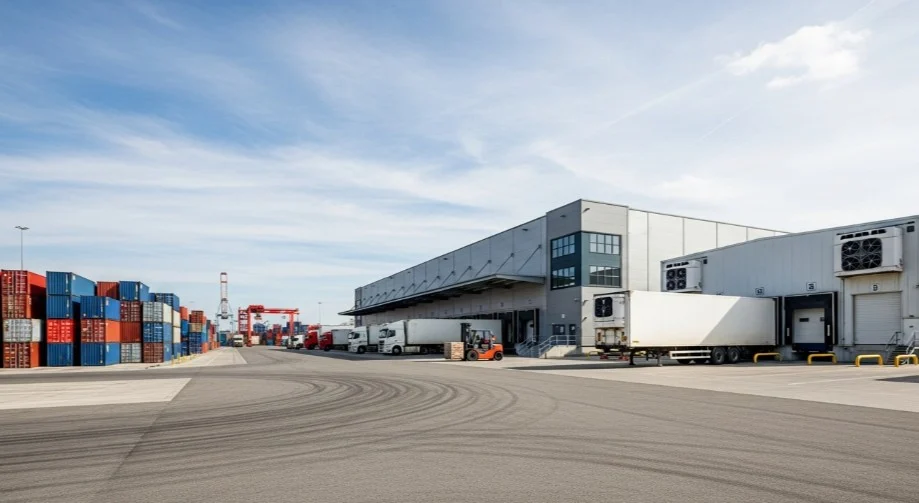
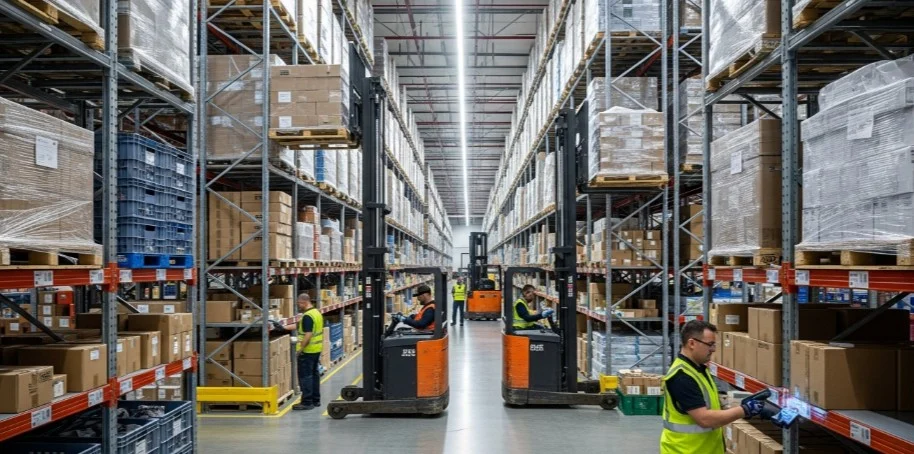
Multi-location warehousing means that a business manages its inventory at multiple different warehouses or distribution points, rather than in a single center. This structure can sometimes be established with warehouses in different cities, sometimes with facilities with separated duties within the same city, and sometimes with a main warehouse and regional warehouse model. The goal is not just to distribute products to different buildings. The main goal is to respond to orders faster, strengthen stock access, meet regional demand more accurately and manage the operation load more balanced. A single-warehouse structure may be sufficient up to a certain scale. However, as the order volume grows, the delivery network expands, and the customer's speed expectation increases, the single-center model begins to slow down.
At this point, multi-location storage provides significant flexibility to the business. When products are kept closer to the customer, shipping time may be shortened. Regional densities can be managed more easily. Some locations focus on quick-turn items, while others may keep deeper stock. Thus, delivery capability increases and the pressure on the main warehouse decreases. However, the critical point here is this: Having more than one warehouse does not mean that a strong structure has been established on its own. The real success comes when all locations work with a common plan. If the questions of which product will be kept in which warehouse, which order will be released from which point, how much stock will be in which location and in which cases the transfer will be made are not clear, the multi-location structure creates confusion, not advantage.
Multi-location warehousing is not just a decision to increase the number of warehouses. It is also a holistic decision regarding stock visibility, order routing logic, warehouse task distribution, capacity utilization and shipment flow. This model becomes more critical especially for businesses in the growth process. A single-centered structure may become insufficient over time for companies that receive orders from different regions, expand their dealer network, manage multiple delivery points, or aim for fast delivery. In such cases, multi-location storage enables more agile and controlled management of the operation.
Here logistics programs play an important role. Because it becomes difficult to accurately monitor stock movement, order flow, transfer needs and location-based density in more than one warehouse with manual methods after a certain volume. It is necessary to clearly see which product is in which warehouse, which order should be delivered from which location, and at what point capacity pressure occurs. When this visibility is provided, the multi-location structure operates more securely. If it is not provided, the same product appears in different warehouses, the order is directed to the wrong location and the shipment flow is weakened.
Operation of Multi-Location Storage Structure
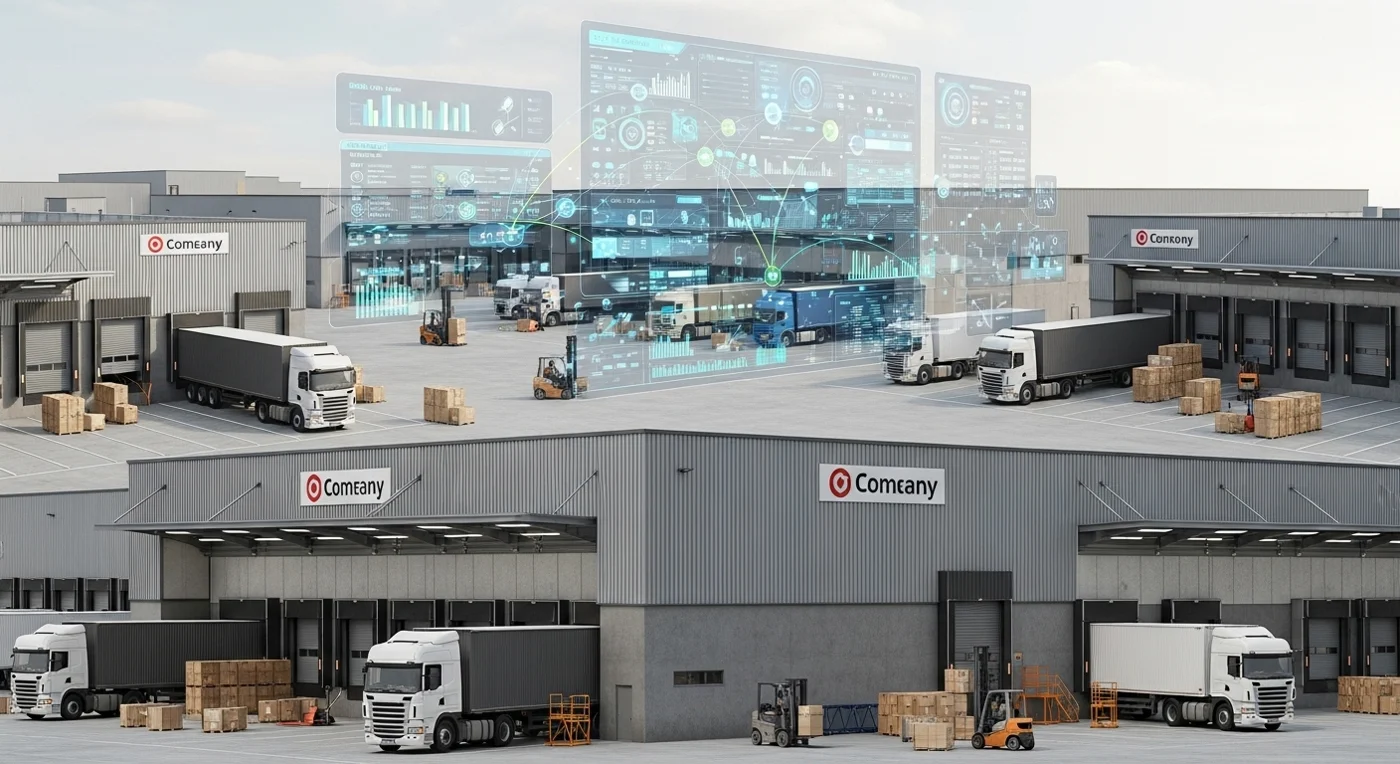
The operation of a multi-location storage structure is not based on all warehouses undertaking the same task. In most buildings, each location has a separate role. The main warehouse carries a wide stock depth. Regional warehouses work for faster distribution. Some points are used only for temporary holding, transfer or to relieve busy period load. The first requirement for this system to function correctly is to clearly determine why each location exists. When all warehouses start doing the same job, the structure grows but does not become stronger.
The second basic element of operation is stock visibility. When an order arrives, the business needs to know not only whether the product exists, but also in which warehouse it is located, whether it is actually ready for shipment, and whether it has been allocated to other orders. One of the most common problems in a multi-location structure is that the product appears to be available in the system but cannot be used operationally. That's why stock tracking is not just quantity tracking. It is also the job of correctly managing the distinction between available stock, reserved stock, stock in transfer and pending stock.
In this structure, the order routing decision is also at the center of the operation. It is not always the best solution for every order to leave the nearest warehouse. Sometimes moving out of the main warehouse preserves stock integrity. Sometimes shipping from a regional warehouse shortens delivery time. Sometimes, combining products from two different locations into a single order creates a new planning need. Therefore, the operation of a multi-location storage structure is based not only on physical stock distribution but also on the ability to direct the order flow to the right point.
Inter-warehouse transfer is one of the important parts of this operation. In some locations, demand increases, some products run out quickly, and in some regions, stock waits for a long time. In such cases, product transfer is made between warehouses. However, if the transfer is carried out unplanned, it does not provide any advantage. Unnecessary transfer both creates costs and disrupts stock visibility. Therefore, warehouse transfer should be carried out according to need, with a clear timing and recorded.
In order for the operation to be sustainable, similar operation discipline should be established in every location. If counting is done regularly in one warehouse but is poor in another; If shipment approval is systematic at one point and manual at another, the structure becomes increasingly fragile. Multi-location storage is not about making central decisions and applying them differently locally, but about operating the central logic consistently in all locations.
Factors Determining Planning in Multi-Location Storage
The most basic element that determines planning in multi-location storage is the demand structure. A healthy plan cannot be established without correctly answering questions such as which product returns faster in which region, which category is in higher demand in which city, in which location there is an increase in which period of the year. When the demand movement is not read well, more stock is kept than necessary in some warehouses, and there is a constant shortage in some warehouses. This situation both extends the delivery time and reduces stock efficiency.
The second important element is delivery geography. In which regions customers are concentrated, from which centers orders come more frequently, and on which routes the delivery pressure increases, directly affects the planning. Two regions with the same number of orders do not create the same operational load. Traffic density, distance structure, number of stops and vehicle access may differ. For this reason, warehouse layout and stock distribution should be evaluated not only on the map but also on real field data.
Stock turnover rate is also one of the strong factors that determine planning. Keeping fast-turning products in a warehouse far from the customer can slow down delivery. Conversely, spreading slow-moving products to every location creates unnecessary stock fragmentation. Therefore, not every product group should be distributed with the same logic. Which products will be widely distributed in a multi-location structure and which will remain in the central warehouse should be evaluated separately. Here, product volume, order frequency and delivery importance should be considered together.
Storage capacity is also a direct determinant. If a location's physical space, number of personnel, loading capacity and daily processing speed are not sufficient, overloading that warehouse will cause problems. Some warehouses are suitable for stock but cannot handle heavy shipments. Others are good at quick exit but do not offer enough space for deep stocking. For this reason, planning should be done not only on product basis but also on location capability basis.
Another important element is information flow. If data is reflected late between locations, counting discipline is weak, or order flow cannot be monitored in real time, planning quality decreases. In order for decisions to be sound in multi-location storage, all points must work with common data. Here, logistics programs offer significant advantages in terms of location-based stock visibility, order routing, transfer planning and capacity tracking. Thus, planning is shaped according to the measurable situation, not the general estimate.

Operational Impacts of Multi-Location Storage
The most visible operational impact of multi-location warehousing occurs in delivery speed. If the product is available in a warehouse closer to the customer, the order can be shipped in a shorter time. This provides a significant advantage, especially in sectors where fast delivery is expected. In the single-center model, all orders originate from the same point and a slowdown begins above a certain threshold. Distributed structure spreads the load and allows more flexible management of delivery time.
The second important effect is balancing the workload. In structures where all orders are collected in a single warehouse, serious pressure occurs during busy periods. Order preparation, loading and checkout operations are accumulated at the same point. In the multi-location model, this pressure can be distributed to different points. In this way, while there is overcrowding in one warehouse, another spot is prevented from remaining empty. This balance also provides a significant advantage in terms of personnel efficiency.
Stock access is also strengthened operationally. In a properly planned structure, the product does not just wait in a single center. It is kept accessible in areas where demand is high. This reduces the waiting time of the order in the warehouse. At the same time, some urgent demands can be met more flexibly. However, this effect is only advantageous if stock visibility is strong. Otherwise, the fact that the product that appears to be in a warehouse cannot actually be used will weaken the operation.
However, multi-location storage does not always make operation easier. Managing multiple locations simultaneously multiplies shipping decisions. Questions such as which order will leave which warehouse, which stock will be transferred to which point, and which warehouse the return will return to, increase. This requires operational discipline. The structure that provides agility when managed correctly produces complexity when managed poorly.
It also creates a two-way effect on the cost. In some cases, the delivery cost decreases because the customer receives service from a closer warehouse. In some cases, additional warehouse management, transfer movement and stock fragmentation may increase costs. Therefore, when evaluating the operational effects of multi-location storage, not only delivery time but also the total warehouse management burden should be taken into account.
Problems Encountered in Multi-Location Storage
The most common problem in multi-location warehousing is lack of inventory visibility. If the product appears to be available at a location in the system but is not actually usable, the order may be directed to the wrong warehouse. This extends the shipping time and creates a loss of trust on the customer side. Especially in businesses with weak counting systems, stock differences grow rapidly. When there is more than one location, the effect of these differences becomes more visible.
The second important problem is stock fragmentation. Distributing the same product in low quantities to more locations than necessary may result in not enough quantity remaining at the appropriate location to meet the order, even if the total stock is available. This creates the need for unnecessary transfers. As the transfer increases, the operation becomes more complex, the cost increases and the delivery time increases. Therefore, stock distribution cannot be done without planning in multi-location storage.
Planning errors are also an important problem. If it is not clear which product will be kept in which warehouse, which order will come from which location, and in which cases the transfer will be made, teams start to make instant decisions. This breaks the standard. When the decision varies from person to person, the same situation produces different results on different days. This makes it difficult to establish a sustainable structure.
Another problem is the difference in operations between locations. If counting is done regularly in one warehouse but loosely in another, if the loading flow is strong at one point but weak at another, the overall system breaks down. Multi-location storage requires not only a central system but also a common operation culture. Each location operating with a different logic causes loss of control.
Lack of technological infrastructure creates great risks. A solid infrastructure is required to see multiple locations on a single screen, monitor stock movements in real time, support order routing decisions and measure warehouse-based performance. Without this support, the multi-location structure produces management burden, not growth advantage. Therefore, the success of this model depends on the quality of management rather than the number of physical warehouses. When installed correctly, it provides flexibility and speed. When installed incorrectly, it causes stock confusion, shipping errors and cost increases.
Correct design of storage processes ensures that products are shipped at the right time and in the right way. To understand the basis of this process in more detail, the content why warehouse management is important in logistics can also be examined.