
What Does Service Level Mean in Logistics?
Service level in logistics is one of the basic concepts that show the extent to which a business can fulfill its service promise to its customers. In its simplest sense, it is about delivering the right product in the right quantity, at the right time, to the right place and under the right conditions. However, the issue is not limited to whether delivery takes place or not. The speed of order preparation, complete delivery rate, undamaged delivery, accuracy of information flow and how smoothly the customer experiences the process are also evaluated within the service level. Therefore, service level is not only a performance measure in logistics, but also the external reflection of operational quality.
For many businesses, logistics success is at first glance associated only with speed. However, a fast but irregular, incomplete or faulty operation does not mean a high service level. What is important for the customer is not only that the product arrives quickly, but also that it arrives as expected. Even if the order arrives on time, if the wrong product is sent or the parcel arrives damaged, the service perception is weakened. Likewise, even if the product arrives correctly, if there are constant delays or the delivery process is uncertain, the service level decreases. Therefore, the concept requires evaluating speed and accuracy together in logistics.
Service level is also linked to business results as it directly affects customer satisfaction. High service quality creates trust, supports repeat orders and strengthens brand perception. Low service levels not only create operational problems; It also means customer loss, increased complaint burden and additional costs. Therefore, service level is not an issue followed after sales, but a strategic area that should be taken into account at the very beginning of planning. Especially businesses working with logistics programs become more advantageous in maintaining this level by monitoring the data generated from order to delivery more regularly.
Equivalent of the Concept of Service Level in the Logistics Process
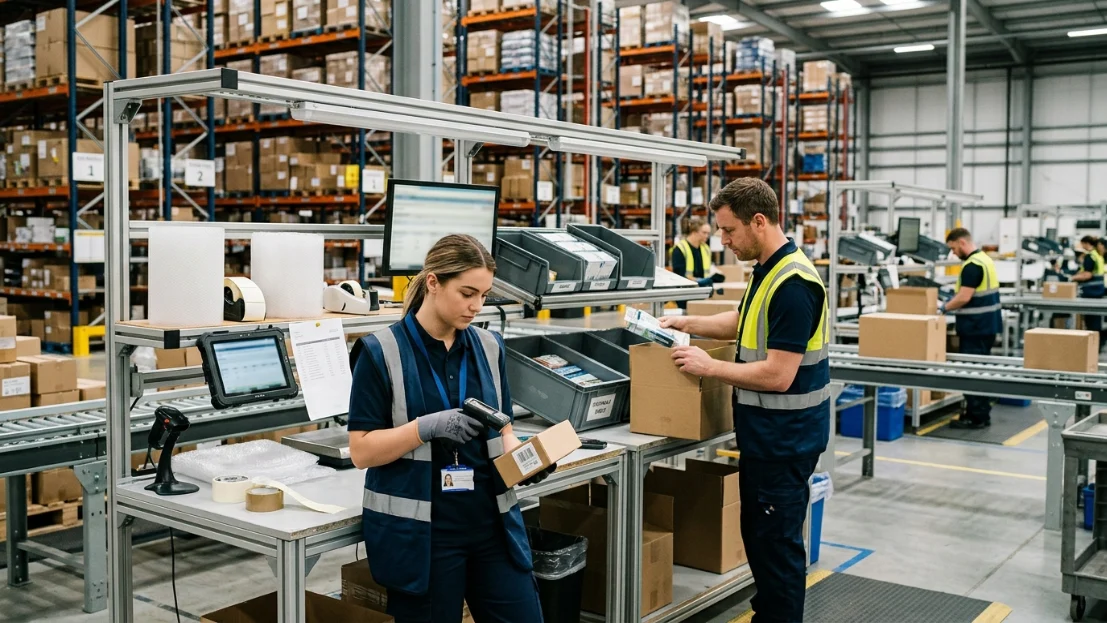
The equivalent of service level in the logistics process is the real response of the service commitment given to the customer within the operation. In other words, the harmony between the promise made by the business at the planning table and the result realized in the field is at the center of this concept. Having the product in stock after receiving the order, preparing it on time, loading it into the correct vehicle, proceeding within the planned route and delivering it without errors is the practical equivalent of service level. Therefore, this concept covers not only the final delivery moment, but the entire process from the moment the order is placed in the system to the moment the customer receives the product without any problems.
Many steps in logistics processes proceed in conjunction with each other. Problems with stock accuracy can extend lead time. If preparation is delayed, vehicle exit may be delayed. Delivery time may be affected if the vehicle exit sags. Customer satisfaction may decrease when delivery time is affected. This chain shows that service level is actually the collective result of the entire operation, not a single team. Therefore, the concept's relevance in the process is felt not only at the last step in contact with the customer, but at every stage.
Service level is also a measurable structure. Data such as on-time delivery rate, complete order rate, damage-free shipping rate, delivery success and customer feedback make this concept concrete. A business may think its service is good, but if there is no regular data to support this, this evaluation will be incomplete. Therefore, service level should be considered as a performance area that is monitored and developed, not felt.
Operational Elements Determining Service Level
One of the most important factors that determine the service level is stock accuracy. If there is a discrepancy between the product appearing on the system and the product actually in the warehouse, the order preparation process will be disrupted. When the product cannot be found, when time is lost due to incorrect shelf information, or when the product that appears to be in stock is not actually available, a delay occurs on the customer's side. Therefore, one of the first conditions for a high service level is that the most basic data is correct.
The second important element is order preparation discipline. The order must be prepared accurately and in a controlled manner, not quickly. Wrong products, missing quantities, incorrect labeling or mixed orders directly reduce the service level. The more standard and orderly the preparation process is, the less likely there is to be an error on the delivery side. Therefore, in-warehouse operations have a great impact on the service level, even though they do not come into direct contact with the customer.
Transportation and distribution plan are also among the determining factors. If the correct route is not established, if the vehicle capacity is not used balancedly, if the delivery order is not well planned or if the address data is not clear enough, the promise made to the customer cannot be kept. The service level is determined not only by the existence of the product, but also by its movement in the correct flow. Therefore, shipment planning should be compatible with customer expectations.
The quality of information flow is also an important part of this structure. Notifying the customer of the wrong delivery date, not updating the order status, or operating teams working with different data weakens the service quality. The customer often looks not only at the outcome but also at the communication during the process. The user who is correctly informed about his order can tolerate small deviations more easily. On the other hand, the customer who is left ambiguous perceives the process more negatively.
The Effect of Service Level on Operation and Customer Process
The impact of the service level on the operation is first seen in the quality of planning. When the service level is desired to be kept high, processes have to be established in a more controlled manner. This ensures more disciplined operation in many areas, from warehouse layout to shipment setup, from vehicle usage to delivery order. In other words, service level is not only a result reflected on the outside, but also an element that necessarily strengthens the internal order.
In the customer process, the impact is much more visible. Arriving on time, delivering the order in full, undamaged and providing accurate information throughout the process creates trust in the customer. The feeling of trust means repeat orders, positive experience and strong brand perception. From the customer's perspective, logistics is often the most obvious part of the after-sales experience. Therefore, when the service level decreases, overall satisfaction may suffer even if the product quality is good.
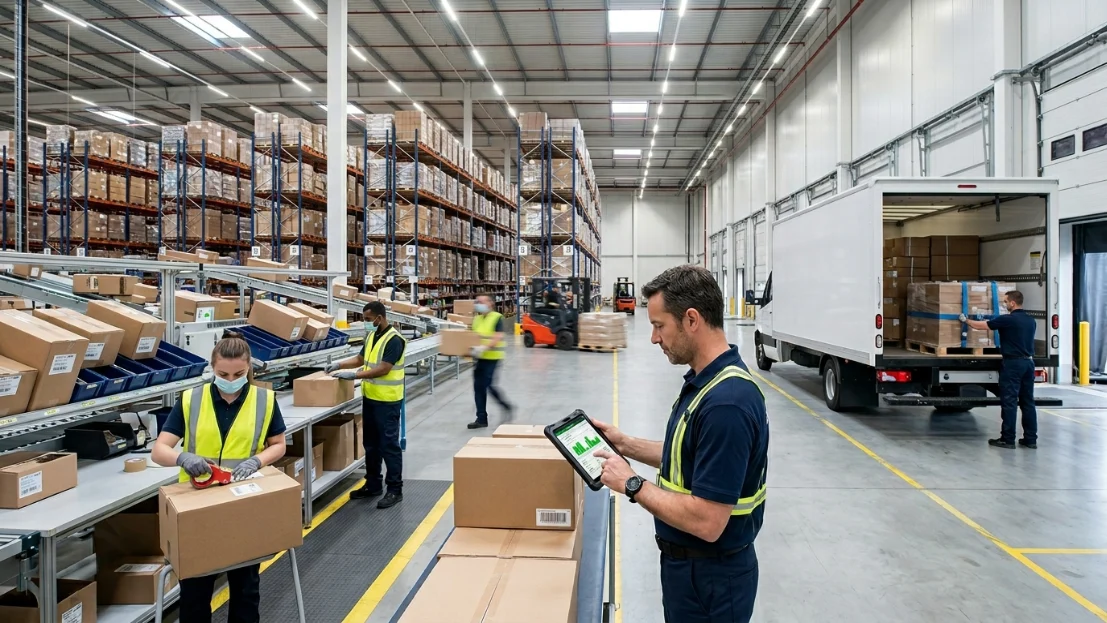
The effect of low service level does not only appear as delay. An increase in complaints results in increased customer service burden, need for reshipment, increased return rates and additional pressure on the operation. If an order goes wrong or late, it affects not only that transaction but also many subsequent processes. Therefore, a decrease in service level results in increased costs and operational complexity over time.
High service level increases the decision-making power of the business. Over time, it becomes clearer which regions work more efficiently, which customer types experience fewer problems, and which models provide more reliable results. Thus, the operation turns into a structure that not only saves the day but also improves itself. Therefore, service level is as much about operational maturity as customer satisfaction.
Points to Consider in Maintaining Service Level
The first thing to consider in order to maintain the service level is that the promise given is compatible with the operational capacity. Promising a very ambitious delivery to the customer and not being able to deliver it internally may seem like an advantage at first, but it creates a loss of trust in the long run. Therefore, the commitment should be based on real operational power, not theoretical. Balanced and reliable service is more valuable than short but unmeasurable periods.
Secondly, data accuracy must be maintained at all times. If stock information, address records, order details, shipping notes and delivery statuses are not up to date, the service level will decrease over time. Because incorrect data prevents the establishment of correct operations. Therefore, service quality is maintained not only by field performance but also by the accuracy of the information in the system.
Using standard processes is also an important point. Carrying out the same job using a different method every day increases the risk of error. Quality becomes more sustainable when certain standards are established in the order preparation, control, loading and delivery steps. These standards should be applicable, not too rigid. The aim is not to slow down the process, but to reduce recurring errors.
Finally, continuous measurement and feedback is required. It is not possible to maintain service level without regular monitoring of on-time delivery rate, order completeness level, error sources and customer feedback. The area that is not measured cannot be developed. For this reason, the service level is not a structure that is established and left once, but a management area that is constantly monitored and updated when necessary. Sustainability of a high service level is only possible by maintaining this discipline.