What Does Block Train Transportation Mean?
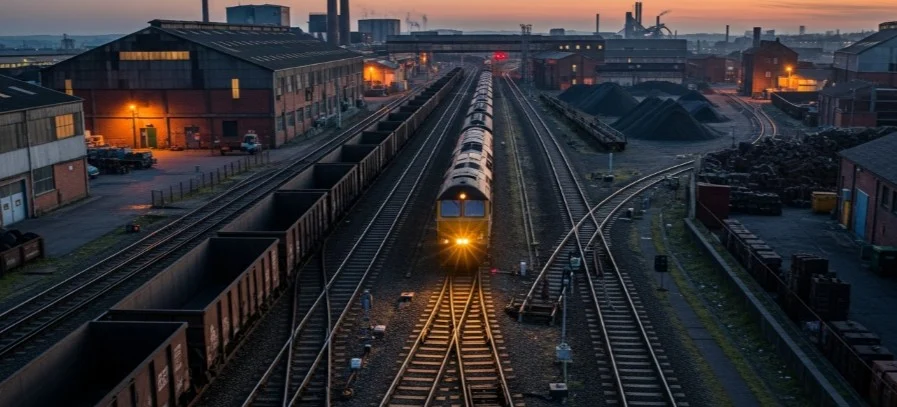
Block train transportation is the uninterrupted transportation of the same load from the starting point to the destination with a single train set. In this method, wagons are not collected from different cargo owners; all allocated to a single sender or the same type of product. In this way, transfer, loading and unloading processes are minimized, transportation time is shortened and operational costs are reduced.
In the modern logistics world, block train transportation offers a strategic solution, especially for sectors that need high volume and continuous transportation. It has become one of the preferred methods of countries in international trade, thanks to its ability to transport larger amounts of cargo at the same time compared to highway transportation and its environmentally friendly structure.
What is the Difference of Block Train Transportation from Other Transportation Methods?
The most obvious difference of block train transportation is that the wagons are independent of the collection-distribution processes. While in conventional train transportation the loads of different senders are brought together, in block trains all wagons are separated into a single shipment. This provides both time and cost advantages.
In addition, block trains do not adhere to a specific timetable; Once the load is ready, a voyage can be arranged. The fact that it is safer and has a higher carrying capacity than road transportation makes this method stand out especially in long-distance and international transportation. It also helps prevent traffic congestion on the highway and accumulations at customs crossings.
In Which Sectors Is Block Train Transportation More Preferred?
Block train transportation is widely used, especially in raw material-intensive sectors. In the mining, iron and steel, chemical and energy sectors, there is a need to ship tons of cargo at the same time. High-volume products such as coal, iron ore, cement and petroleum derivatives are transported by block trains, saving time and reducing logistics costs.
This method also stands out in agricultural products, container-loaded import-export shipments and the automotive industry. Block train transportation has become an important part of the regular and reliable supply chain, especially in sectors such as automotive that work with the principle of "just-in-time production".
How to Plan Block Train Services?
Block train services are planned primarily according to the cargo volume and delivery schedule of the sending company. When determining the number of wagons and the capacity of the train, logistics companies take into account the type of product to be transported, its weight and the infrastructure at the destination. Factors such as loading-unloading terminals, customs processes and line density are also evaluated during the planning of the voyage.
In international transportation, coordination between countries is of great importance. Cooperation is made with the railway administrations on the route, transit permits are obtained and a timetable is prepared to ensure uninterrupted transportation to the destination. Thanks to this planning, efficiency is increased and possible delays are prevented.
What is the Contribution of Block Train Transportation to Logistics Companies?
Block train transportation provides a serious competitive advantage to logistics companies. The ability to transport large volumes of cargo at once prevents delays that are common in road transportation. This allows companies to deliver on time and increases customer satisfaction.
In addition, being an environmentally friendly transportation method helps logistics companies achieve their sustainability goals. Lower carbon emissions compared to highway transportation is important in terms of compliance with environmental standards, especially in the European market. However, reducing costs in the long term is another factor that increases the profitability of logistics companies.
On Which Lines Is Block Train Transportation Applied in Turkey?
Türkiye attaches great importance to block train transportation as it is a bridge between Asia and Europe. Connections to Europe, especially via the Marmaray line, increase Turkey's strategic power in logistics. Within the scope of the "Central Corridor" route extending from China to Europe, Türkiye has assumed the role of an important transit country in block train transportation.
In addition, block train services starting from logistics centers such as Izmit, Mersin, Izmir, Samsun and Kars are used on both domestic and international routes. Especially transportation via the Baku-Tbilisi-Kars Railway line has further increased Turkey's effectiveness in regional logistics. In this way, Türkiye has become an important part of the global supply chain.
Regular operation of these lines directly affects not only transportation capacity but also planning and efficiency. Thanks to modern logistics programs, block train services are managed more effectively, contributing to international integration and sustainable transportation goals.