What is Cold Chain Transportation?
Cold chain transportation is a special logistics method that ensures that products that are sensitive to temperature and humidity are transported within specified temperature ranges without deterioration from the point of production until they reach the consumer. The term "chain" here emphasizes that the entire process must continue uninterruptedly under the same conditions. In other words, after the product leaves the factory, it must be kept under constant control during the storage, loading, transportation and delivery stages.
This system is especially critical for food safety. Because once the products leave the cold chain, that is, their temperature values deteriorate, it shortens their shelf life and puts consumer health at risk. Therefore, cold chain transportation is not only a logistic process, but also a guarantee of quality and safety.
Which Products Are Transported in Cold Chain Transportation?
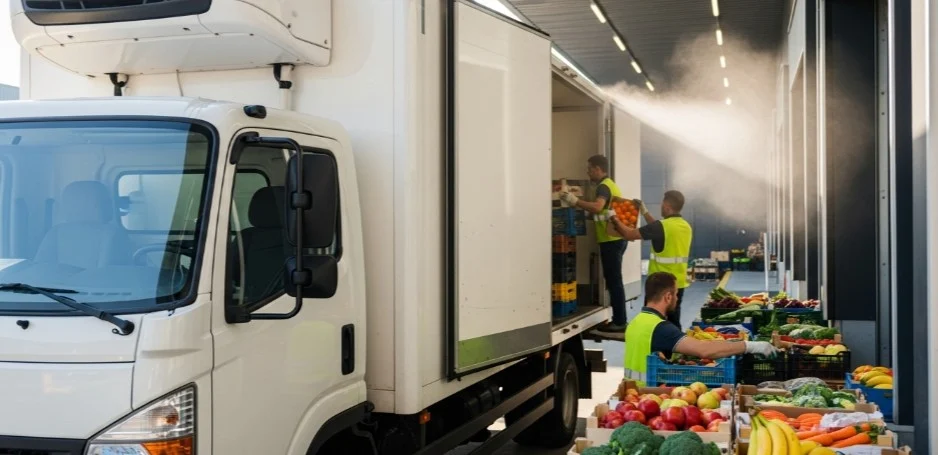
Cold chain transportation covers a very wide range of products. The most common examples include fresh fruits and vegetables, milk and dairy products, meat, fish and seafood. If these products are not stored at certain temperatures, they can quickly deteriorate and become unconsumable.
Apart from this, medicines and vaccines are also among the products included in cold chain transportation. Especially in the healthcare sector, some drugs need to be stored between 2-8 degrees to maintain their effectiveness. In addition, cosmetic products, flowers, some chemical raw materials and biotechnological products are also transported within the scope of the cold chain. This diversity shows that cold chain transportation is an indispensable method in many sectors, not only in food.
Why is Cold Chain Transportation Important?
Cold chain transportation is of great importance both economically and health-wise. Products with a high risk of spoilage in the food industry can cause millions of liras of damage when the chain is broken. At the same time, spoiled food reaching the consumer causes food poisoning and health problems. Therefore, this process plays a critical role in both preventing commercial losses and protecting public health.
In the health sector, its importance is much greater. Failure to keep vaccines or medications at the correct temperature may cause them to lose their therapeutic effects. For example, some vaccines used during the pandemic had to be stored at ultra-low temperatures. This revealed what a vital role cold chain transportation plays on a global scale.
What are the Features of Cold Chain Vehicles?
Vehicles used in cold chain transportation are equipped with special cooling systems, unlike standard transportation vehicles. The most important feature of these vehicles is that they can keep the indoor temperature constant at the desired level. Vehicles usually have temperature sensors, and thanks to these sensors, the temperature at which the products are stored can be monitored instantly throughout the journey.
In addition, the insulation of cold chain vehicles is also very important. Thanks to insulated walls, doors and loading compartments, the temperature of the outside environment does not pass inside. In addition, these vehicles should be stacked regularly in a way that does not hinder the air circulation of the products. Some vehicles have different compartments and various products can be carried at the same time by setting different temperature values in each compartment. In this way, flexibility is provided and different product groups can be delivered to customers in a single shipment.
How to Plan Cold Chain Transportation?
The most critical point of cold chain transportation is complete planning throughout the process. First of all, the characteristics of the products to be transported and the temperature ranges they require are determined. Then, the capacity of the vehicles to be used, the adequacy of the cooling systems and route planning are made.
Starting with storage areas, loading and unloading times should be kept to a minimum. Because temperature values may change every time the doors are opened. For this reason, loading plans should be made quickly and regularly, and the products should be stacked appropriately in the vehicle. In addition, alternative scenarios should be prepared, taking into account possible delays along the way, traffic or customs procedures.