Dangerous Goods Transportation
Dangerous goods transportation refers to the transportation of substances that have the potential to harm human health, the environment or material assets due to their physical, chemical or biological properties, within the framework of certain rules. This type of transportation; It covers high-risk cargo such as explosives, flammable liquids, toxic gases, radioactive substances and corrosive chemicals. The transportation process is not limited to just transferring cargo from one point to another; It is a multi-layered process that includes all stages such as loading, unloading, storage and emergency management.
For this reason, dangerous goods transportation, unlike standard logistics activities, is strictly regulated by national and international legislation. ADR (European Agreement on the International Transport of Dangerous Goods by Road), which is especially valid for road transport, is one of the main references in this field. The purpose of the rules is to protect not only the carrier, but also public safety and the environment. This type of transportation requires high attention and expertise, as the slightest negligence can lead to serious accidents, environmental disasters and irreversible consequences.
Which Products Does Dangerous Goods Transportation Cover?
Products within the scope of dangerous goods transportation are generally grouped under nine main classes. These classes include explosive substances, pressurized and flammable gases, flammable liquids, flammable solids, oxidizing substances, toxic and infectious substances, radioactive products, corrosive chemicals and other hazardous materials. For example; Fuel oil, LPG, acids, medical waste, pesticides, industrial solvents and some batteries are among the products included in this scope.
The common feature of these products is that they can pose serious risks such as fire, explosion, poisoning or environmental pollution when transported under incorrect conditions. Therefore, it is not just the type of product; amount, packaging type, transportation temperature and reaction potential are also evaluated. The same product may be included in different risk classes in different concentrations or in different packaging styles. These details make it clear why transportation planning is much more complex than standard transportation.
Why Are Dangerous Goods Subject to Special Transport Rules?
The main reason why dangerous goods are subject to special transportation rules is that the impact of possible accidents that may occur during transportation is extremely high. A leak, collision or improper intervention with such substances; It directly threatens not only the transportation vehicle but also the surrounding people, residential areas and natural resources. Transportation, especially on urban or international routes, may cause the risk to spread over a wide area.
Special transport rules; It was created to minimize these risks, limit the extent of damage in a possible accident and speed up the intervention process. Every detail, from the technical equipment of the vehicles to the training of the drivers, from transport documents to warning signs, is determined within this framework. The existence of rules is not only a necessity; It is also the basic element of a systematic and safe logistics chain. The severe sanctions that will be imposed in case of non-compliance with the rules clearly demonstrate the seriousness of this risk.
In Which Sectors Is Dangerous Goods Transportation Used?
Dangerous goods transportation has a critical role in many basic areas of industry and commerce. Chemical industry, oil and energy sector, pharmaceutical industry, agriculture and mining are among these areas. For example, the transportation of raw materials or semi-finished products produced in chemical plants to different production points is often considered as dangerous goods. Similarly, fuel and natural gas transportation is also carried out within this scope.
In addition, the health sector is one of the areas where hazardous material transportation is used extensively. Medical waste, biological samples and some medicines require special transport conditions. Pesticides and fertilizers used in the agricultural sector can cause serious damage to the environment when handled incorrectly. This diversity shows that hazardous material transportation is not limited to heavy industry only; It shows that many sectors that affect daily life are directly affected by this system.
What Safety Precautions Are Mandatory in Vehicles Carrying Dangerous Goods?
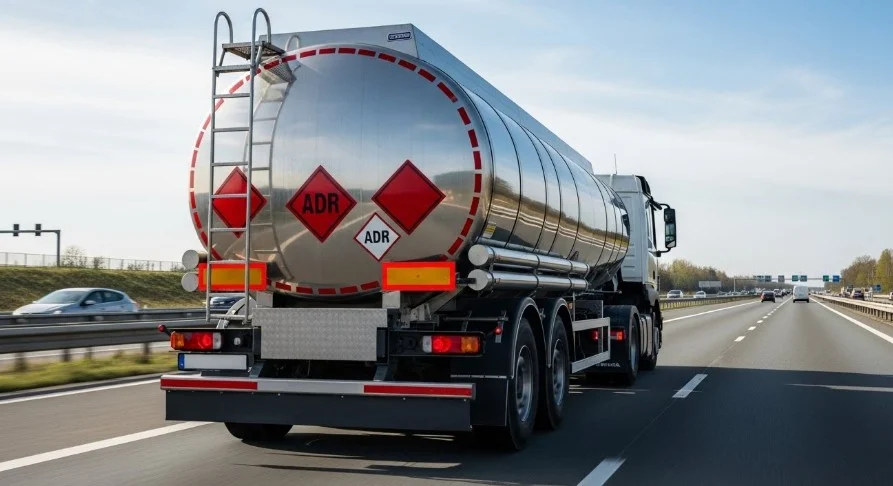
Vehicles carrying dangerous goods must have special technical and visual equipment, unlike standard transportation vehicles. There must be orange plates, hazard labels and warning signs indicating the risk class of the substance carried on the vehicle. In addition, vehicles should be fully equipped with fire extinguishers, safety equipment, anti-leakage materials and personal protective equipment. These equipment are vital for rapid and effective response in a possible emergency.
However, security is not limited to vehicle equipment alone. Elements such as periodic maintenance of vehicles, loading and unloading procedures, and ADR training of drivers are also among the mandatory security measures. Planning the transportation route in advance, avoiding residential areas as much as possible and determining emergency scenarios in advance are integral parts of this process. All these measures clearly demonstrate why hazardous material transportation is an area that requires high discipline.